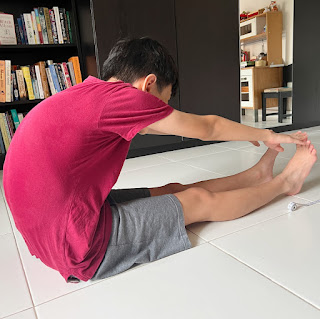
Showing posts sorted by relevance for query stretching. Sort by date Show all posts

Sunday, January 21, 2024

Intense Static Stretching Versus Strength Training For Muscle Growth

Static stretching device
Who says that strength training is needed to make muscles bigger and stronger? A study published 2 days ago showed that intense static stretching of the pectoralis major (chest) muscles 4 times a week produced similar hypertrophy gains to strength training done 3 times a week. 

What? Just as effective as strength training? I was surprised to say the least. Well you know I am not a big fan of static stretching at all. Skeptical? I was too!

81 participants were allocated to 3 groups in this study. A static stretching group, strength training and control group. Pec stretching was done for 8 weeks, 4 days per week for 15 minutes per day. Those in the strength training group trained 3 times a week doing 5 x12 repetitions. All the subjects were instructed to maintain their regular exercise routine during the study. They exercised at least twice a week in a wide range of sports like fitness training, team sports or strength-endurance training. 

Results showed significant strength increase in the static stretching and strength training group compared to the control group. There were no significant differences between the static stretching and strength training group.

There was moderate muscle thickness increases in the static stretching and strength training group compared to the control group. Muscle thickness was measured using ultrasound imaging. There was actually no difference between the static stretching  and strength training group.

Range of motion test
In terms of range of motion (ROM), static stretching group had significant moderate ROM increases compared to the strength training group. No difference in ROM between the strength training and control group.

It has been suggested that the shared underlying physiological mechanism between stretching and strength training is the high stretching tension both produces to induce stretch mediated hypertrophy (Warneke et al, 2023). This tension translates into chemical signals that stimulate anabolic processes to generate new muscle tissue.

Wow. Increased size, strength and range in 8 weeks compared to strength training. However, note that static stretching via a stretching device like in this study needed a second person to assist and adjust the stretching device. Moreover, regular strength training can prevent osteoporosis and sarcopenia.


References

Warneke K, Wirth K, Keiner M et al (2023). Comparison Of The Effects Of Long-lasting Static Stretching And Hypertrophy Training On Maximal Strength, Muscle Thickness And Flexibility In The Plantar Flexors. Eur J Appl Physiol. 123(8): 1773-1787. DOI: 10-.1007/s00421-023-05184-6

Wohlann T, Warneke K, Kalder V et al (2024).Influence Of 8-weeks Of Supervised Static Stretching Or Resistance Training Of Pectoral Major Muscles On Maximal Strength, Muscle Thickness And Range Of Motion. Eur J Appl Physiol. DOI: 10.1007/s00421-023-05413-y

Monday, November 27, 2017

Stretching Your Muscles? Or Stretching Your Brain?

Kids stretching before gong fu classes
We've written before that just one static stretch of 30 seconds can reduce your maximum strength. Hence, I've questioned whether it improves your sporting performance or help prevent exercise related injury.

Here's another interesting thought. Does stretching makes one more flexible because repeated stretching alters the mechanical properties of the muscles, tendons and joints you are stretching?

Or stretching causes you and your muscles to tolerate more tension when you stretch? You become more flexible or can reach further because your brain tells you that you can and not because you've altered the mechanical properties in the joint.

This was exactly what researchers were wanting to know when they pooled data from 26 studies that measured the mechanical properties of the joint, muscles and tendons after stretching programs of between three to eight weeks.

Participants in those 26 studies stretched at least twice a week, average total stretching time slightly less than 20 minutes each week.

I was surprised (and I'm sure you'll be too) when the results appear to support the second theory as only very small changes were seen in the mechanical properties measure. Participants did get more flexible and were willing to tolerate greater tensile forces while stretching.

Bear in mind that the stretching period was only eight weeks. The authors point out that weight training over similar duration show increase in neuromuscular strength gains but no change in size of the actual muscles. The same may be true for stretching, neural changes first followed by physical changes.

Some readers will undoubtedly say that don't worry about whether is the the physical muscle changing or neural changes. As long as flexibility improves.

As written earlier, we do not know for sure if stretching improves your sporting performance or helps prevent injuries, but the general consensus is that regular stretching may be beneficial in the long term.


Reference
Freitas SR, Mendes B et al (2017). Can Chronic Stretching Change The Muscle-tendon Mechanical Properties? A Review. Scan J Med Sci Sports. DOI: 10.1111/sms.12957

Sunday, January 24, 2021

How To Increase Range Of Motion

All the kids posed for this picture

A typical comment from many of our patients is that they have been stretching all the time but their muscles still feel tight. 

Range of motion (ROM) is necessary as part of our health and important during sports performance. And static stretching is often prescribed to get better ROM gains. We know from previous research that static stretching is effective in improving our range of motion. 

However, the latest systematic review/ meta-analysis shows that strength training (ST) is just as effective as static stretching in getting improvements in ROM.

The researchers pooled data together and found eleven good quality studies comprising 452 participants to derive the following results.

Interventions lasted between 5 and 16 weeks while training frequency ranged from two to five times a week. Subjects included healthy sedentary subjects, subjects who already participate in ST subjects with fibromyalgia and subjects with chronic neck pain. There were also elderly adults who had difficulties in one of four tasks, transferring, bathing, walking and going to the toilet.

Both ST and static stretching groups showed significant improvement in ROM in seven of the studies. Differences between the groups were non significant. They did not find any significant differences in active and passive ROM for both ST and stretching. Dynamic stretching did not improve ROM in any of the groups.

You must be wondering how ST helps to improve ROM that is not statistically distinguishable from static stretching. The authors wrote that ST with an eccentric focus requires the muscles to produce forces in a lengthened position. This is what helps improve ROM. They also found that concentric strength training improves ROM when full range is required.

One study demonstrated significant reductions in pain associated with increases with strength, suggesting that decreased pain sensitivity may be another mechanism in which ST help increase ROM. Another mechanism may be an improved agonist-antagonist co-activation helping ROM gains.

The authors concluded that both ST and static stretching can improve ROM both in the short and long term suggesting that there are both neural and mechanical factors at work. Both ST and stretching can be prescribed to help improve ROM. If one does not respond or adhere well to a stretching program, they can switch to strength training instead.

What does that all mean you (if you did not understand the discussion above)? If you're looking to get an increase in your range of motion say in your knee joint, you can do eccentric strengthening exercises with some stairs at home. This previous article explains everything in a simple manner.

Just remember that static stretches are best done after exercise as just one bout of static stretching can slow you down as well as reduce your maximum strength.


Reference

Afonso J, Ramirez-Campillo R, Moscao J et al (2021). Strength Training Is As Effective As Stretching For Improving Range Of Motion: A Systematic Review And Meta-analysis. DOI: 10.31222.osf.io/2tdfm

Monday, February 23, 2009

Does Stretching Improve Performance Or Help Prevent Exercise Related Injury?

Me and a gymnast at the old National Stadium
Alright folks, I have a controversial topic to discuss. Trainers, coaches and of course physios have for the longest time asked both elite athletes and patients to stretch be it for rehabilitation or in pursuit of improved performance.

Do physios, coaches and trainers advise and patients/athletes practice it out of habit, outdated beliefs or current best practice?

In this day and age, we want everything to be evidence based. But are there any evidence based benefits of stretching? Does stretching help prevent exercise related injury?

The  articles discussed by Shrier (2004) and Weldon and Hill (2003) are both systematic reviews. (A systematic review is a computer aided search for ALL randomized & controlled clinical trials, meaning it's top of the pile in terms of quality).

Well, with regards to improving performance, here's the evidence. In Shrier's review paper, only one article suggested running economy (running more efficiently) was improved. Four articles studied running speed or sprinting, with one study being beneficial, one detrimental while two was inconclusive.

The paper concluded that stretching does not help to improve maximum strength or how high you can jump. There is some evidence however, to suggest that regular stretching performed outside of the pre exercise period (and not stretching before exercise) improves strength, jump height and sprinting. 

In fact, a few studies actually show that stretching before exercise has actually shown to increase your chance of sustaining an injury. Especially so if you are an endurance athlete with reduced flexibility.

The evidence also suggests that stretching immediately prior to exercise is detrimental to activities that require isolated force or power. There is also insufficient evidence to show that it helps with running economy (running more efficiently).

Well, here you go, not quite what you expected right? I know what our patients are gonna ask us. What do we do? Do we still stretch or not? Here's my opinion based on my work and observations with our athletes and patients. 

1. Minimize pre exercise static stretching since it hinders power and maximum strength.
2. Do your pre game or exercise warmup with movements that simulate your sport.
3. Stretch after exercise or at a time not related to exercise since regular stretching helps.

Please email me if you want the articles.

References

Shrier, I. (2004). Does Stretching Improve Performance? A Systematic and Critical Review of the Literature. Clinical Journal of Sports Medicine. 14(5) p 267-273.

Wendon, SM and Hill, RH. (2003). The Efficacy of Stretching for Prevention of Exercise-related injury: A Systematic Review of the literature. Manual Therapy. 8(3) p 141-150


Sunday, March 20, 2022

Are You Still Stretching?

I was just talking to a physiotherapist about teaching static stretching to his patient. I had written many articles about why static stretches are a big no-no especially before exercise. 

I thought it's common knowledge by now that just one static stretch of 30 seconds can reduce your maximum strength. You're more likely to get injured if you do static stretching before exercising.

Maybe that physiotherapist is not alone. An article published in 2020 found that 80 percent of 605 personal trainers surveyed in the United States of America still prescribed traditional static stretching to their clients. 

Static stretching is prescribed to help static flexibility. Some readers will recall doing the sit-and-reach test in the NAPFA test in our schools. This is done sitting on the floor with legs out straight and they measure how far beyond your heels you can reach. Best way to improve static flexibility? To do more static stretching. You can go to the end of your available range and hold that for say, 10 seconds and repeat.

If you read that article (Nuzzo, 2020), having good flexibility will not help you live longer. It does not help prevent falls. 

Good static flexibility also does not help prevent injuries. This topic has been the studied widely, a few studies have found that there are some benefits, while a few other studies have found that being too flexible is associated with injury. Most do not seem to make much difference.

Static flexibility is not associated with non sports related problems like low back pain.

Most importantly for the readers of this blog, having better static flexibility does not improve your sporting performance. Unless your sport requires a certain range like in gymnastics or if you are trying to become a ballerina. Donaben, our champion cyclist will tell you that time trialling on a bike will require some flexibility to hold that aerodynamic tuck and still pedal with power. The rest of us? Probably not.

If you are a runner, you are unlikely to get injured if you cannot touch your toes. A study found that amongst elite runners (with an average VO2 max of 73 mL/kg/min), the runners who were the least flexible (in the sit-and-reach test) were the most economical runners (better running economy). This suggests that being less flexible is better as this allows your legs to store and return energy (like a coiled spring) with each running stride (Jones, 2002)

So take note that static flexibility is not that important, unless your specific sport requires it. Stretching before, during or after a workout does not prevent subsequent muscle soreness. It does not reduce inury risk either (Herbert et al, 2011).

So what do you do to warm up before your exercise if you do not stretch? The goal of warming up is to physically warm your muscles to make them more pliable as well as get your heart rate up to be ready to deliver oxygen to your working muscles. 

Before my run, I'll ride a stationary bike for 10 minutes or just run the first kilometer real slow before picking up the pace. If you're playing badminton or tennis, I'll suggest some lunges, side to side movements, i.e. sport specific movements that you may use while playing.

Want to improve your range of motion? Try strength training instead.


References

Jones AM (2002). Running Economy Is NegativelyRelated To Sit-and-reach Test Performance In International-standard Distamce Runners. Int J Sp Med. 23(1): 40-43. DOI: 10.1055/s-2002-19271

Nuzzo JL (2020). The Case For Retiring Flexibility As A Major Component Of Physical Fitness. Sports Med. 50(5): 853-870. DOI: 10.1007/s40279-019-01248-w

Herbert RD, Noronha MD and Kamoer SJ (2011). Stretching To Prevent Or Reduce Muscle Soreness After Exercise. Cochrane Reviews. DOI: 10.1002/14651858.CD004577.pub3

Sunday, May 16, 2021

Does Dynamic Stretches Help Running Performance?


Our new physios doing the dynamic stretches
Previously I had written that performing any static stretches before exercise or competition can be detrimental to your athletic performance. Studies have also shown that doing static stretches before competing or exercising is more likely to cause an injury. In fact, performing just one static stretch of 30 seconds can reduce your maximum strength.

Meanwhile, fitness professionals, coaches and other studies have suggested performing dynamic stretches as an alternative warm up to static stretches instead.

Well, this published study had runners do both. An initial assessment was done to get the runners VO2 max levels. The researchers had a group of well trained university runners do a general warm up (GWU) on one day versus doing a general warmup (GWU) plus dynamic stretching (DS) before getting them to run until exhaustion on a treadmill on another day.

The GWU consisted of running on the treadmill at a speed equivalent to 70 percent of each runner's VO2 max for 15 minutes. Each runner then did a standing rest for 5 minutes. This was followed by the run to exhaustion on the treadmill at a speed equivalent to 90 percent of their VO2 max. 

When doing the GWU plus DS, dynamic stretches were done for all the lower limb muscle groups (10 reps each), see picture below. That took 3 min 45 seconds in all. After resting for 1 min 15 seconds, the runners started their run to exhaustion on the treadmill at a speed equivalent to 90 percent of their VO2 max. 

Well, this published study had runners do both. An initial assessment was done to get the runners VO2 max levels. The researchers had a group of well trained university runners do a general warm up (GWU) on one day versus doing a general warmup (GWU) plus dynamic stretching (DS) before getting them to run until exhaustion on a treadmill on another day.

The GWU consisted of running on the treadmill at a speed equivalent to 70 percent of each runner's VO2 max for 15 minutes. Each runner then did a standing rest for 5 minutes. This was followed by the run to exhaustion on the treadmill at a speed equivalent to 90 percent of their VO2 max. 

When doing the GWU plus DS, dynamic stretches were done for all the lower limb muscle groups (10 reps each), see picture at the top. That took 3 min 45 seconds in all. After resting for 1 min 15 seconds, the runners started their run to exhaustion on the treadmill at a speed equivalent to 90 percent of their VO2 max. 

The results showed that the GWU plus DS group lasted significantly shorter (10:40 min)  than the group that just did the GWU (12:40 min). Distance covered was between 2.3 to 5.4 km.

The authors of this study were hypothesizing that performing GWU plus DS may help improve endurance running performance. Unfortunately the results indicated otherwise. 

Another study by the first 3 authors (Yamaguchi et al, 2015) showed that performing the same five DS (10 reps) followed by a rest period of 1 min 23 secs actually prolonged the run time to exhaustion (an extra 18.2 percent) compared to a sit down rest. Run to exhaustion on the treadmill was also done at a speed equivalent to 90 percent of their VO2 max.

What is good about this study was that there was real attention to detail. The testing was done during the off season for the runners so no prior vigorous training was done. The runners were also asked to avoid performing intense exercises or training on each test day and the day prior. 

The runners were also instructed to have similar meals and drinks on the test days and previous day and to finish any meal 2 hours before running. Runners were also asked to avoid alcohol the day before running and caffeine on the test day. Each runner wore the same attire for the test runs and performed the test at the same time of day in consideration to circadian rhythm. The laboratory temperature was kept constant at 20-24 degrees Celsius throughout. In short, the authors tried to keep everything else constant other than the warm up. 

What wasn't as good? Bear in mind that the study only had 8 runners. They are definitely fast runners (looking at their profile), but the sample size is small. The rest period after the dynamic warmup was also extremely short (150 seconds). Fatigue after the DS was attributed by the authors as the cause for worse performance.

When I was competing in events like 1500m - 5000m on the track, I'll do a rather languid jog of 2-3 km to warm up followed by some limbering movements to loosen up. This was followed by repeating some striding (or goal pace running) 5-8 times for 150-200 meters. Then it would be resting and waiting for our event to start. Definitely longer than 1 minute 15 seconds before racing. Definitely did not do any sort of stretching then.

My advice would be to try out dynamic stretches or whatever that is new (shoes, bike, run technique etc) in your off season, not before an important competition, to see if it would be something that might work for your body. Most importantly, do what works for you. Every body is different.

References

Yamaguchi T, Takizawab K, Keisuke S. (2015). Acute Effect Of Dynamic Stretching On Endurance Running Performance In Well-trained Male Runners. J Strg Cond Resc. 29: 3045-3052. DOI:10.1519/JSC.0000000000000969

Yamaguchi T, Takizawab K, Keisuke S et al (2019). Effect Of General Warm-up plus Dynamic Stretching On Endurance Performance In Well-trained Runners. Res Quart Ex and Sport. 90(4): 527-533. DOI: 10.1080/02701367.2019.1630700.

*thanks to Thiviyan and Rashid Aziz for getting me the articles

Sunday, June 13, 2021

Evidence For Using Floss Bands

showing how Flossing is done
Remember the floss band courses we used to teach? We often had participants asking what is the evidence behind increasing joint range of motion (ROM), sporting performances, helping with recovery and decreasing pain. In short, they all wanted to know how it works. 

I wrote previously that you've got to try it to believe it, well there is now a published *scoping review article for floss bands (Konrad et al, 2021), referenced below.

The review paper summarizes the existing evidence for the effect of floss band treatment on range of motion (ROM), sporting performance (strength or jump performance), recovery (due to DOMS) and pain (due to disease or injuries).

In all, 24 studies met the inclusion criteria with a total of 513 subjects. 15 of the 24 studies investigated the effects of a single floss band application on the ROM of several joints. On the ankle joint, flossing was found to have a significant change of 11.17% in the dorsiflexion ROM.  

4 studies investigated the effects of calf flossing on the ankle, showing a very large increase of 19.95% in dorsiflexion of the ankle.

Similarly 4 studies measured thigh flossing and found a significant increase in knee bending (3.61%), and knee straightening (7.38%). However, another study showed no improvement in hip ROM after flossing the thigh. None of studies showed any decrease in range after flossing.

Of the two studies that investigated the effects of flossing on DOMS, one study reported significantly reduced DOMS 24 and 48 hours post exercise in the study group (in the upper arms) compared to the control group. The other study (on leg muscles) found no difference in the intervention versus control group following 12, 24, 36, 48 60 and 72 hours post exercise.

When comparing flossing to other treatment like dynamic stretching, flossing had a more noticeable effect in increasing hip range of motion and maximal eccentric knee extension (Kaneda et al, 2020b). With regards to static stretching and flossing, rate of force development was more pronounced in the flossing group compared to the static stretching group (Kaneda et al 2020a). Kaneda and colleagues concluded in both studies that flossing should be applied as a warm up rather than as a stretching exercise. This is exactly what my patients who do CrossFit tell me. They normally use a floss band for warm up before they start their easier routines, before the heavy lifting.

I know all athletes are after improved performances. Results from the individual studies showed that 11 of of the 44 performance measures showed a significant improvement (comparing pre and post floss band application, Table 3 in article). There is some evidence that joint flossing (ankle and knee) can increase jump height, although sprint performance (5 to 20 m sprints) seems to be unaffected after ankle flossing. (Personally, I would floss the quads and hamstrings and calf muscles if I wanted to improve sprint times rather than the ankle). 

One study showed improvement in maximal voluntary contraction (strength) in the quadriceps muscle and hamstrings after thigh flossing.

The researchers suggest this is possibly due to hormonal responses related to the flossing. Similar to other occlusion (or blood flow restriction methods), enhanced growth hormone and norepinephrine levels increase may be responsible for increase in performance reported. More importantly, the review concluded that from the involved studies there was no detrimental effects on performance from a single floss band treatment.

Evidence also show that a single floss band treatment is able to increase ROM of the related joint and can positively affect jumping and strength performance. Possible mechanism is suggested to be changed neuromuscular function rather than changed mechanical properties.

after surgery in 2016
After Ronald Susilo (above) ruptured his patella tendon and tore his anterior cruciate ligament at the same time, he came to see me after the surgeon reattached his patella tendon. He did not have the range to even pedal one round on the stationary bike. I definitely increased his knee ROM with a single floss band treatment. He could pedal immediately after a single floss band application. 

Yes, back then it was only one subject (or n=1), however it was a definite improvement. Those of you reading then may be critical and probably not even believe it, but I have since replicated it many times in our clinic. Hence I feel that clinical evidence (what we see in the clinic) is just as good as published evidence (like this scoping review).

There will probably be long term studies about the effects of flossing treatment on joint ROM, sporting performance, whether it helps with recovery and decreasing pain. I am sure there also will be studies that say there are no benefits to it. The question is does it work for you?

Reference

Konrad A, Mocnik R and Nakamura M (2021). Effects Of Tissue Flossing On The Healthy And Impaired Musculoskeletal System: A Scoping Review. Front. Physiol. 21 May 2021. DOI: 10.3389/fphys.2021.666129

*A scoping review has a broader scope compared to traditional systematic reviews with correspondingly more expansive inclusion criteria.

Let's do the twist

Saturday, July 9, 2011

Straits Times Article on Athletic Myths ST 090711

Myth No. 1 in today's article in the Straits Times under the Sports section on page C20 looks at whether static stretching before exercise is ideal for your pre-race (exercise) warm-up.

We've written on this many times before in both our clinics' blogs, have a look.

Stretching and performance

How necessary is stretching?,

Just one stretch can slow you down

More on stretching

Sunday, September 8, 2024

Can You Prevent Running Injuries?

We have been seeing some runners in our clinic recently. Some seasoned runners, but quite a few new, novice runners. My definition is unless the runners have been training, running and/ or racing for at least 5 years, they are still considered novice runners.

As a runner I would love to run long and hard daily, alas if we do that injury definitely beckons. How do we prevent that from happening? Can we actually prevent running injuries?

I came across an article investigating if it was possible to prevent running injuries. In this particular study (Leppanen et al, 2024), there were 325 participants who were fairly new runners (less than 2 years of running experience) and aged between 18-55 years. Interventions were completed before the actual runs. The runners attended group training twice a week with a physiotherapist for 6 months.

They were divided into 3 training groups, 2 intervention and 1 control group. All 3 groups followed a similar training program and all runners were taught about the basics of running technique. The first intervention group (108 runners) did strength and conditioning exercises for the hip and core. The 2nd group (111 runners) did exercises to strengthen the ankle and foot, while a third control group (106 runners) did static stretching.

Each training session lasted about 30 minutes twice a week with the exercises and difficulty level progressing over the course of 6 months. Each exercise had 4 different versions with different levels of difficulty and intensity. After the training session, the participants ran outdoors for 30-75 minutes. The participants reported all running related injuries each study week using a mobile application.

Results show that the group that focused  on hip and core training sustained the least injuries among the 3 groups. They had 39 percent lower prevalence of all overuse injuries and 52 percent lower prevalence of overuse injuries compared to the control group. 

I was surprised that the  ankle and foot exercise group did not prevent running related injuries compared to the stretching group. The incidence of acute injuries was lower in the control group than ankle and foot exercise group perhaps suggesting that stretching may help prevent acute running injuries. However, do take note that there were a low number of acute running injuries in this study so this observation should be approached with caution.

This study shows that beginner or novice runners injury rates can be significantly reduced by training the hip and core muscles. Overuse injuries can be cut by about half by strengthening this area compared to stretching which has always been traditionally thought to prevent injuries. And it's really easy to do with just body weight and/ or resistance bands.

Come see our physiotherapists at Physio Solutions and Sports Solutions to learn about what stregthening exercises would help prevent running injuries for you.

Reference

Leppanen M, Viiala J, Kaikkonen P et al (2024). Hip And Core Exercise Program Prevents Running-related Overuse Injuries In Adult Novice Recreational Runners: A Three-arm Randomised Controlled Trial (Run RCT). BJSM. 58: 722-732. DOI: 10.1136/bjsports-2023-107926.

Sunday, February 25, 2024

Ulnar Nerve Entrapment

Left ulnar nerve
My patient who is a Team Singapore cyclist came in with a case of ulnar nerve entrapment on Friday. Ulnar nerve entrapment* is the second most common nerve condition happening in the upper limb after carpal tunnel syndrome.

The ulnar nerve arises from the brachial plexus at C8-T1 and travels down the inner part of the upper arm through the arcade of struthers (pictured below).

At the elbow, the ulnar nerve travels just behind the bony part on the inner part of the elbow. This is also know as the "funny bone" when you can get sensations of pins and needles after bumping the area. 

Picture by Conor Jones
As the ulnar nerve crosses the elbow, it passes through a bony tunnel and up to 2 other potential points for blockage making it vulnerable to pressure or stretching. Prolonged periods of sleeping with the elbow bent can also cause over stretching of the nerve. My patient hurt her ulnar nerve after riding for a few hours in a new position after changing her handlebars. Riding for a few hours on bumpy roads did not help. She had also fractured both her clavicles (R followed by L in the last few months). This is also known as the cubital tunnel syndrome.

The ulnar nerve supplies the sensation and muscles to the 5th and half the ring finger. Symptoms are related to degree of irritation of the nerve. They start off intermittent in nature and may only come on at night after the nerve has been stretched for a longer time. 

Pins and needles, aching or tingling in the little and/ or ring finger will be the common symptoms. This is what my patient felt. If the irritation persists, the symptoms may become constant and progress to numbness in the 5th and/ or ring finger and ultimately weakness in the hand.

As the ulnar nerve exits the bony tunnel, it goes into the flexor carpi ulnaris muscle. Follwing that at the wrist, it travels superficially to the flexor retinaculum and passes into Guyon's canal.  

R wrist
Guyon's canal is formed by 4 borders (pictured above). The roof is the palmar carpal ligament, the floor being the transverse carpal ligament, the ulnar (inner) border is the pisiform and the radial (outer) border is hook of hamate.  If the nerve is irritated at the wrist it is known as Guyon's canal syndrome.

Picture from Medical Art Library
The flexor carpi ulnaris and inner half of flexor digitorum profundus muscles are innervated by the ulnar nerve and the hypothenar muscles (pictured above).

Knowing the exact site of nerve irritation during an accurate clinical examination will help decide what needs to be done for treatment. Some doctors send their patients to do a nerve conduction test, but I personally find that an upper limb tension test (with radial nerve bias) done correctly does a much better job. Others may do ultrasound imaging to help diagnosis. Do not confuse it with thoracic outlet syndrome.

Just remember not to have a steroid/ cortisone injection.

*Ulnar nerve entrapments are commonly seen in cyclists, golfers, weightlifters and construction workers.


References

Kong G, Brutus JP, Vo TT et al (2023). The Prevalence Of Double- And Multiple Crush Syndromes In Patients Surgically Treated For Peripheral Nerve Compression In The Upper Limb. Hand Surg Rehabil. 42(6): 475-481. DOI: 10.1016/j.hansur.2023.09.002

Raut P, Jones N, Raad M et al (2022). Common Peripheral Nerve Entrapments In The Upper Limb. Br J Hosp Med. 83(10): 1-11. DOI: 10.12968/hmed.2022.011

Have a look at this ulnar nerve video.

Monday, May 7, 2018

Young Athletes Are Not Small Adults


I've had a few worried parents message or call me on the past two weekends saying that their child has had sharp pain suddenly without any falls or accident. A common area of complaint is in the knee or heel.

After a few short questions and answers I am usually able to reassure the parent that their child is fine and nothing is really serious about the painful episode.

Often these young children/ athletes have growing pain. The long bones grow quite quickly (especially if they are having a growth spurt) and the muscles don't lengthen quite as quickly. When the child is active, this shorter muscle(s) often pull on the bony attachments and cause pain.

Their muscles usually will not have developed enough strength to compensate for the sudden increase in lever lengths.

My older boy who is eight plays football once a week. Other days he's at the playground running, jumping and climbing etc. He's growing taller and  his muscles are not always strong enough to generate the forces required to move his longer and now heavier legs. As a result, he often has this "growing pain" in the night especially after he'e been particularly active.

I just taped my older boy's leg last night
From treating all the young and teenage athletes in our clinics, we observe that it may take up to about nine months for the muscles to develop length and strength after a growth spurt in their bones.
This form the basis of injuries that these young athletes get. If the bones grow longer and the muscles don't quite catch up in length, the muscle will be relatively shorter and hence tighter.

The area most prone to overload is where the muscle attaches via the tendons to the bones. Hence these pain and injuries we see are growth related.  Common areas are where the Achilles tendon inserts in the heel bone (usually known as Severs disease, although it is definitely not a disease), and the patella tendon on the shin bone (Osgood Schlatters disease).

Other areas include the quadriceps tendon into the knee cap (Sindling Larsen disease) and the attachment of the hip flexors onto the pelvis.

It is usually due to overload of the tendon attachment to the bone from doing too much too soon (without rest) that causes these pain or injuries.

Majority of the time, most of these cases get better when the muscles "catch up" with the bone growth by lengthening and getting stronger.

Stretching the muscle may be worse sometimes as static stretching can place more traction forces on the tendon insertion on the bone. We tend to teach our young patients and their parents to use the trigger ball instead.

Correct strength training that is pain free often helps the muscle take load off the tendon attachment. Don't use a load that is too heavy.

Come see us in our clinics if your young or teenage child athlete needs help.

Tuesday, July 14, 2009

Got DOMS?


This is what one of my patients who had DOMS did with his pain (cupping), hope you didn't do the same.

DOMS or delayed onset of muscle soreness is a condition where you have muscle pain, soreness or stiffness that is usually worse 2-3 days after exercise, hence the word delayed, and the pain usually subsides over the following few days.

Certain activities are more likely to cause DOMS. Those that require your muscles to forcefully contract while lengthening (eccentric contractions) seem to cause the most soreness. Ever took part in a race where there were lots of running downhill? Then you should know the feeling in your legs a couple of days later. Other examples of eccentric contractions are going down stairs or lowering your barbell slowly during weights. 

I've also seen patients/ athletes who had DOMS at the beginning of a new an exercise program (especially a new gym/ weight program), after a change in sports activities, or after prolonged or higher than usual intensity efforts.

DOMS is different from the muscle pain or fatigue you experience during exercise. The onset of pain from DOMS always occurs 2-3 days after the cessation of exercise. This helps differentiate it from more acute injuries such as a muscle rupture or sprain.

The soreness will go away on its own after a few days. There are a few things you can do to help. Icing or contrast baths (hot/cold) seems to help although no clear evidence proves they are effective. I had severe DOMS in my legs after my first half marathon race about 12 years ago and tried contrast baths and they didn't seem to help much. Gentle stretching of the affected muscles has also been recommended although there is again no real published evidence found.

There is some evidence that massage seems to help alleviate DOMS by about 30%, but it had no effects on muscle function.

Wanna know what seems to work? My personal experience suggest that performing reduced intensity and low volume exercise will increase blood flow to the affected muscles and often reduce pain. Pedaling at low resistance on a stationary bike is ideal as you don't have to worry about traffic (if you ride on the roads). An easy swim or just walking in waist or chest height water works well too. Wearing compression garments will help reduce it as well. These above mentioned strategies do have some support in the research.

Can you prevent it? Szymanski (2003) suggests the repeated-bout effect as a way of reducing DOMS. This is a progressive adaptation to eccentric exercise. If you perform repeated bouts of lower intensity eccentric exercise 1-6 weeks before your key event,it will help reduce DOMS and exercise induced muscle damage. Thus, a gradual introduction of eccentric exercise, over a period of weeks, is encouraged.

References

Herbert,RD and De Noronha, M. (2007). Stretching to prevent or reduce muscle soreness after exercise. Cochrane Database of Systematic Reviews. Issue 4. The Cochrane Collaboration.

Szymanski, D. (2003). Recommendations for the avoidance of delayed-onset muscle soreness. Strength and Conditioning Journal 23(4): 7–13.

Zainuddin, Z et al (2005).Effects of massage on delayed-onset muscle soreness, swelling and recovery of muscle function.Journal of Athletic Training.Jul-Sep;40(3):174-80.

Saturday, December 16, 2023

Iliopsoas Related Groin Pain

Previously I have written about hip adductor related groin pain (ARGP), which is the most common area for groin pain. There is also iliopsoas related groin pain (IRGP). Patients who have IRGP usually have iliopsoas tenderness/ pain while stretching the area  and have pain with resisted hip flexion (or bending). 

There is not enough evidence to suggest which exercise protocol or treatment technique is superior for treating IRGP. However, there is evidence to suggest a quicker return to sports (and to running) using a multi-modal program (manual therapy, stretching, heat and exercise therapy) compared to exercise therapy alone (Weir et al, 2010).

Strengthening the iliopsoas via isometric, concentric and eccentric contractions using elastic bands for 6 weeks have been found to substantially improve iliopsoas (hip flexor) strength (Thorborg et al, 2016). King et al (2018) found that athletes had high rates of pain free return to sports participation and had improved cutting performance when rehabilitation focused on inter-segmental (lateral hip, legs and abdominals) control.

Neutral spine, anterior or posterior tilt
There you have it, no magic stretches, protocol, nor any therapeutic machine to really treat groin pain on its own. Some physios teach core or stabilization exercises with a neutral spine (pictured above).

3 planes of motion
Like I wrote before, we do see many patients with groin pain in our clinics. Our approach to treatment is very different. It depends on what our assessments show. The patients do not do any strengthening exercises when they are in the clinic. We prefer to treat them using mostly our hands instead. Since the pelvis (or hip) has 3 planes of motion, we treat them with our hands with respect to he 3 planes of motion (pictured above).

For example, for a patient with groin pain, they may also have a hip rotated to the right side (pictured below). 
Hip rotated to right side
We can treat the hip with respect to the shorter side. Short in terms of length. So the right side is shorter in front (pectineus) in the picture above, while the left hip is shorter behind. 

The patients can then do the strengthening exercises they need on their own. We treat what they cannot do themselves in the time they have with us. Come see us in our clinics if you have groin pain.


References

King E, Franklyn-Miller A, Richter C et al (2018). Clinical And Biomechanical Outcomes Of Rehabilitation Targeting Intersegmental Control In The Athletic Groin Pain: Prospective Cohort Of 205 Patients. BJSM. 52(16):1054-1062. DOI: 10.1136/bjsports-2016-097089

Thorborg K, Holmich P, Christensen R et al (2011). The Copenhaen Hip And Groin Outcome Score (HAGOS): Development And Validation According To The COSMIN Checklist. BJSM. 45(6): 478-491. DOI: 10.1136/bjsm.2010.080937

Weir A, Jansen JA, vande Port IG et al (2011). Manual Or Exercise Therapy For Long-Standing Adductor-Related Groin Pain: A Randomised Controlled Clinical Trial. Manual Therapy. 16(2): 148-54. DOI: 10.1016/j.math.2010.09.001

Sunday, April 18, 2021

Does Your Growing Child Have Knee Pain?


Recently, we have seen some young athletes in our clinics, complaining about pain after playing sport. I've written about growing pain in young children/ athletes before. When these children/ athletes are having a growth spurt during adolescence, the long bones grow faster than muscles. The muscles take a while to lengthen so the muscles tend to pull on the attachments on the bone.

This is especially so when a child is active, the muscles will pull on the bony attachments where the muscles attach causing pain (also known as apophysitis).


An area of pain at the knee which is common in children is known as Osgood Schlatters disease (OSD). The pain is located where the patella tendon finishes at the tibia, known as the tibial tuberosity.

Researchers from Denmark studied 51 youth athletes (51 percent female) between the ages to 10 to 14 with OSD. The youths already had pain for an average of 21 months.  Intervention consisted of four visits with a physiotherapist with both child and parent. The first block of treatment focused on decreasing load through decreased activity, education and static hold exercises.

The next block the subjects progressed to exercises which led to a return to their sport. Follow up was done at 4,8,12, 26 and 52 weeks. 

All subjects showed improvement at 12 weeks (study endpoint) with less kids complaining of pain and increased function and quality of life. 31 percent of subjects still suffered from discomfort at 12 weeks, discomfort that they would be not happy to live with, while 80 percent were very satisfied with their treatment results.

Only 16 percent of the subjects managed to return to their sport (RTS) at 12 weeks, compared to 69 percent at 52 weeks follow up. Thigh and hip abduction strength which was the focus of the exercise interventions improved significantly by 12 weeks as did vertical and horizontal single leg jumps.

At one year follow up, only 5 percent of subjects were very unsatisfied with their progress and unable to return to sport.

The study called for significant restrictions (guided by pain/ symptoms response) at the start of sporting activity to decrease load on the tibial tuberosity. Data from the tracking device the subjects wore prior to start of the study to the first block of treatment showed a decrease of 15 minutes per day of moderate to vigorous activity. This may suggest that getting active kids to slow down is difficult. 

Parents may need to explain to the child that activity modification is key to reducing symptoms. Reining in the kids in the short term will help return to sport sooner.

Surprisingly, the tracking devices showed that activity levels decreased by 37 minutes per day by week 12, suggesting that although many reported feeling better and can do more, they were actually less active.

We usually do not encourage stretching the affected muscle as static stretching can place more traction forces on the tendon insertion on the bone. Correct strength training that is pain free often helps to take the load off the tendon attachment. Meaning the weight does not have to be heavy. Elastic bands are very useful too when the young patients cannot handle the weight.

Please come and see us in our clinics if your young and teenage athletes need help.


Reference 

Rathleff MS, Winiarski L, Krommes K et al 92020). Activity Modification And Knee Strengthening For Osgood-Schlatter Disease: A Prospective Cohort Study. Ortho J Sp Med.6(4): 2325967120911106. DOI: 10.1177/2325967120911106

*note that OSD or Osgood Schlatter's disease is not a disease. It is named after Robert Osgood (1873-1956) and Carl Schlatter (1864-1934), an American and Swiss surgeon respectively that described the condition concurrently.

Picture from ESSR
An x-ray of fragmentation of the tibial apophysis n a child with OSD. It is NORMAL in pain free adolescents. 

Sunday, March 7, 2021

No Need To Stretch Or Foam Roll Your ITB?

You are a runner and you haven't been able to run more than 2 km before a sharp pain in your outer knee reduces your run to a hobble. Resting, icing and changing your running shoes made no difference. The sports doctor you saw just diagnosed you with the dreaded Iliotibial Band Syndrome (ITBS). He tells you that you need to stretch your Iliotibial band (ITB) and use a foam roller.

Sounds familiar? Well, this latest published paper on the ITB by Paul Giesler (2020) challenges common treatment approaches of stretching and massaging the ITB. Basically, he says that you do not want to stretch or foam roll your ITB.

Attachments of ITB at L knee
I've written about the ITB before in a few different posts. Except for Daniel Liberman and Carolyn Eng's study, most other articles seem to suggest that the ITB causes pain via a 'friction syndrome'. This is thought to be due to the ITB rubbing to and fro over Gerdy's tubercle on the outer shin bone while running due to hip weakness. 

Treatment is normally targeted at stretching the ITB (to reduce friction). Doctors will often suggest a steroid injection to reduce 'inflammation' (in the bursa) on the outer knee.  Giesler (2020) however,  suggested that ITB pathology is more likely to involve compression of sensitive structures beneath the ITB rather than friction.

also know as Iliotibial tract (ITT)
Since the ITB is a really broad, strong and complex structure with many attachments (picture above) along the hip, thigh and around the knee, it can provide stability for both the hip and knee. Like I wrote before, the ITB is actually thought to function like our Achilles tendon. To store and release energy like a spring. Therefore you cannot and would not want to stretch a spring. A coiled spring can release energy much better than a spring that is stretched out.

From Carolyn Eng's running simulation 
Hence the need to treat the cause of the problem rather than just treating the pain over the outer knee. Hip strength and control thus thought to be key in causing ITBS, especially weakness in hip increased hip adduction (dropping of the hip inwards) during loading. 

Runner on L has increased hip adduction
In runners/ patients with excessive hip adduction while running, progressive rehab and addressing potential causes should be adapted for individual runners, especially while running downhill and during longer runs. I've written on this topic specifically, you can read that article here.

So treatment should be to calm the symptoms (knee pain) and treat the cause. We don't get you to stretch your ITB or use the foam roller in our clinics, come see us if you want to run pain free.

The Paul Geisler (2020) article is free, click on the link under references if you want to read it.

References

Bramah C, Preece SJ Nimh G et al (2018). Is There A Pathological Gait Associated With Common Soft Tissue Running Injuries? AJSM. 46(12): 3023-3031. DOI: 10.1177/0363546518793657

Eng CM, Arnold AS, Liberman DE et al (2015). The Capacity Of The Human Iliotibal Band To Store Elastic Energy During Running. J Biomech. pii: S0021-9290 (15) 00354-1. DOI:10.1016/j.jbiomech.2015.06.017.

Geisler PR (2020). Iliotibial Band Pathology: Synthesizing The Available Evidence For Clinical Progress. J Ath Trg. DOI: 10.4085/JAT0548-19

Friday, April 14, 2017

Is It Necessary To Cool Down After Exercise?

Stretching after a run in the rain
Back when I was working at the old National Stadium, I'll very often before work or during lunch time run on the track or grass surrounding the track.  Straight after I was done, I'll head right in to the clinic. A person walking past commented how I could do that.

I said I just stopped after running and am heading for the showers as my next patient was due soon. He said I should be doing a cool down after such a hard run.

Well, I was in a hurry to get ready for my patient. I'm sure the patient wouldn't like a sweaty, dripping physiotherapist treating him.

Looking back since primary school, I recall our physical education teachers telling us that we need to cool down after exercise and especially after a race/ competition.

Personal trainers will tell their clients that slowing to a jog and/ or lessening the intensity of the workout followed by stretching to transition out of the exercise session so as to prevent muscle soreness and improve recovery.

Some exercise machines in the gym automatically include a cool down period. After your work out time that you keyed in, the machine automatically reduces the workload and continues for five minutes so you can cool down.

I tried looking for scientific evidence regarding that and it seems none of those beliefs were true.

A study had subjects do a strenuous one time session of forward lunges while holding barbells. This is certain to make untrained people extremely sore due to DOMs over the next few days.

Some of the subjects warmed up before by cycling 20 mins gently. Others didn't warm up but did a cool down after the lunges with a similar 20 mins of gentle stationary bike riding. The rest of the group just did the lunges without warm up or cool down.

The next day, the subjects who warmed up had the least pain while there those who did the cool down and the control group had similar pain. Cooling down brought no benefits to the group.

Two other studies I found on professional football players performing cool down versus no cool down yielded the same result. Measures of performance, flexibility and muscle soreness were similar.

One valid reason to cool down after exercise is to prevent venous pooling (or build up of blood in your veins) after vigorous exercise. Blood vessels in your legs expand during prolonged vigorous exercise, allowing more blood to move through them to supply oxygen. When you stop exercise abruptly, the blood stays in your lower body. This can lead to dizziness or even fainting.

It's easy to avoid venous pooling, just keep walking for a few minutes at the end of your workout/ race and you'll maintain normal blood supply to the brain. Would you consider that as a cool down?

So, there's no real published research showing any negative effect if you don't cool down. If you are used to performing a cool down after your exercise, you can definitely carry on. If you don't feel like it, then you probably don't have too.

Unless future research shows otherwise, don't worry if your friend/ trainer/ coach tells you that you need to cool down after exercise.

References

Olsen O, Sjohaug M et al (2012). The Effect Of Warm-up And Cool Down Exercise On Delayed Onset Muscle Soreness In The Quadriceps Muscle: A Randomized Controlled Trial. J Human Kinetics. 35: 59-68. DOI: 10.2478/v10078-012-0079-4.

Rey E Lago-Penas C et al (2012). The Effect Of Immediate Post-training Active And Passive Recovery Interventions On Anaerobic Performance And Lower Limb Flexibility In Professional Soccer Players. J Human Kinetics. 31: 121-129. DOI: 10.2478/v10078-012-0013-9.

Rey E Lago-Penas C et al (2012). The Effect of Recovery Strategies On Contractile Properties Using Tensiomyography And Perceived Muscle Soreness In Professional Soccer Players. J Strength Cond Res. 26(11): 3081-3088.