Sunday, September 18, 2022

How Accurate Is Your Smart Watch?

I have noticed almost all my patients wear a smart watch now. Mostly an Apple watch. Actually, Aized recently has a patient who wears a Rolex on his left hand and an Apple watch on his right. He says he is a watch connoisseur (hence the Rolex), but the Apple watch is more practical since it monitors his health, allows him to read his whatsapp messages, email and also to make payments easily.

Are the readings for heart rate, calories used and energy expenditure accurate? Definitely more so if you have updated personalized metrics like your weight, height, age and gender to make the calorie estimates more accurate. That was what I thought until I looked it up.

I found a study that studied the heart rate and energy expenditure accuracy of the Apple watch, Fitbit Charge HR and Garmin Forerunner 225. All the watches overestimated energy expenditure. 

Another study looked at the Apple watch, Samsung Gear 2, Basis Peak, Fitbit Surge, Microsoft Band, Mio Alpha 2 and the PulseOn. That study found that even though heart rate was adequately measured, energy expenditure was not.

A third study concluded that 2 fitness watches (Polar V800, Garmin Forerunner 920XT) and 3 activity trackers (Garmin vivosmart@HR, TomTom Touch and Withings pulse Ox) were not accurate enough to be used for sports or heathcare applications. Ouch! And I thought Polar and Garmin are the market leaders for sports watches. No prizes for guessing when measuring distances and altitude gain then.

The quality of heart rate data reading can affect accuracy. Compared to using a chest strap to measuring your heart rate with having an Apple watch on your wrist, the chest strap will be more accurate.

According to Apple, how snugly the watch fits against your skin, the surrounding temperature and tattoos can affect readings. The ink, pattern and saturation of some tattoos can block light from the sensor, affecting the reliability of readings. 

Yes, you read correctly, tattoos can affect your sporting performance as we have written before

Note that all the 3 studies had less than 100 participants each and technology for such watches and activity trackers are consistenly improving so the latest versions can be more accurate. For now, bear in mind that the readings are just an estimate.


References

Dooley EE, Golaszewski NM and Bartholomew JB (2017). Estimating Accuracy At Exercise Intensities: A Comparative Study Of Self-monitoring Heart Rate And Physical Activity Wearable Devices. MMIR Mhealth Uhealth. 5(3): e34. DOI: 10.2196/mhealth.7043

Passhler S, Bohrer J, Blochinger L et al (2019). Validity Of Wrist-worn Activity Trackers For Estimating VO2 Max and Energy Expenditure. Int J Environ Res Public Health 16(17), 3037. DOI: 10.3390/ijerph16173037

Shcherbina A, Mattsson CM, Waggott D et al (2017). Accuracy in Wrist-worn, Sensor-based Measurements Of Heart Rate And Energy Expenditure In A Diverse Cohort. J pers Med. 7(2): 3. DOI: 10.3390/jpm7020003

Wednesday, September 14, 2022

Team Building This Quarter


Our 3rd team building session for the year. One every quarter so far this year. We went to Ves Studio to learn pottery. We had great fun with Jeanette Wee teaching us. 
Jeanette is the real master here


Our hand skills in treating patients did not translate the same way however. 
Our craft

Stay tuned for the next team building session.
Group photo


Sunday, September 11, 2022

Deltoid Ligament Sprain? No! It's the Tibialis Posterior

R tibilais posterior
A patient who came in to see me yesterday was diagnosed with a deltoid ligament sprain in his left ankle. He had seen a doctor who referred him to a surgeon. An MRI was ordered, but all came back normal. The surgeon referred him for physiotherapy to treat his deltoid ligament.

L deltoid ligament from Dr R LaPrade JBJS
Here's what the patient told me. He was training for the Ironman 70.3 triathlon in Cebu, Philippines on August 7th, 2022. He had done a lot of  *'brick' training prior to the pain in his left ankle. Triathletes will know that *'brick' workouts are cycling followed by running straight after dismounting to simulate race conditions. One day before the race he felt a sharp left calf pain. As a result, he had to walk the whole run (21.1 km) during his race. Thereafter, after returning to Singapore, the inside part of his left ankle started hurting.

I assessed his ankle joint and his ankle proproception and both were good. No tenderness over the deltoid (inner) and outer ankle ligaments. There was however some tenderness behind his left medial malleolus (that bone sticking out at the inside ankle region) and definitely along his tibalis posterior muscle. Much more than his right ride. 

Single-leg heel raise (SLHR) test ability on the left elicited pain too. Bingo! For the physiotherapists and clinicians reading this, you may already know what is wrong with my patient. He had a problem with his left tibialis posterior. Yes, the same tibialis posterior muscle that can cause the dreaded shin splints and your arches to "collapse". Definitely not a deltoid ligament sprain in his case.

The SLHR test was described by a study (Ross et al, 2021) as one of 4 clinical tests to find out if a patient has tibialis posterior tendinopathy. The other 3 are; pain on tendon palpation, swelling around the tendon and pain and/or weakness with tibialis posterior muscle contraction.

My patient was happy to know that he can resume running after I treated him. 


Reference

Ross, MH, Smith MD, Mellor R  et al (2021). Clinical Tests Of Tibilailis Posterior Tendinopathy: Are They Reliable, And How Are They Reflected In Structural Changes On Imaging? J Orthop Sports Phys Ther. 51(5): 253-260. DOI: 10.2519/jospt.2019.9707

Picture by Ezisports.com.au
*Brick training- short form for bike-run-in-combination. Perhaps also because it was name after a world champion duathlete and surgeon Dr Matt Brick who came up with the term whem he described his bike-run and run-bike training sessions while training for a duathlon race

Sunday, September 4, 2022

The Larger The Disc Injury The More Likely To Heal Without Surgery


Picture from article referenced below

I saw a few patients with slipped discs this past week. Most patients are still very fearful even if their 'slipped discs' happened years ago. They will complain that they have been having back problems ever since.

Having written previously about how 'slipped discscan heal I will share with my patients the facts about how the larger the disc injury, the more likely it can heal without surgery.

The picture above shows the diffferent types of herniated disc, bulging being the mildest and sequestration the most severe.

When there is a lumbar disc herniation, there is a tear or damage to the outer layers (annulus fibrosus) leading to leakage (or herniation) of the soft, gel-like inside material (nucleus pulposus). This leakage may touch or compress (irritate) the spinal nerves which causes an inflammatory response. This results in the patient complaining of pain, sensations of numbness, tingling sensations down their leg and sometimes neurological dysfunction.

Conservative management for 6 weeks (instead of surgical management) is usually the first choice for  newly diagnosed patients. In some patients, spontaneous reabsorption of the disc herniation is a widely recognized clinical observation. The spontaneous shrinkage or disapperance of a herniated lumbar intervertebral disc without surgery is called reabsorption or resorption.

The biological mechanisms involved in herniated disc resorption includes macrophage infiltration, matrix remodelling and neovascularization.

Since our immune system recognizes the gel leakage as 'foreigners' in our vertebral epidural space, this triggers a casade of inflammatory responses including phagocytosis of inflammatory cells, enzymatic degradation, increased inflammatory mediators. All of which means that healing is taking place. As the herniation decreases after resorption, the clinical symptoms also improve.

The type and composition of the herniated disc may predict the possibility of natural resorption. Extrusion and sequestration have a higher chance for resorption since the leakage is in the epidural space, creating favorable conditions for macrophage infiltration and neovascularization.

Picture from Radiopaedia
However if the area of the spine shows Modic changes, it is not conducive to macrophage infiltration and ingrowth of blood vessels, thus preventing resorption. Modic changes in the spine occur in response to degenerative changes of the discs, pathology or infections. 

An earlier meta-analysis of 38 clinical studies done in 2015 showed that resorption of lumbar disc herniation was as high as 62-66 percent (Chiu et al, 2015).

Further research is ongoing to understand what conditions can induce or promote the reabsorbtion of 'slipped discs'. This will help clinicians to rationally formulate treatment plans for patients.

Today is exactly one year on from my 2nd bike accident. Not the kind of anniversary I like to remember but it does mean that I've come quite a bit further than where I was. Of course I'm still not working the hours I did before the accident, but definitely much more than just after the accident. So I'm testimony that you can definitely recover, even after 2 compression fractures in my spine! 


References

Chiu CC, Chuang TV, Chang KH et al (2015). The Probability Of Spontaneous Regression Of Lumbar Herniated Disc: A Systematic Review. Clic Rehabil. 29(2): 184-195. DOI:10.118/269215514540919.

Yu P, Mao F, Chen J et al (2022). Characteristics And Mechanisms Of Resorption In Lumbar Disc Herniation. Arthritis Res Ther. 24, 205. DOI: 10.1186/s13075-022-02894-8

A meta-analysis of 38 clinical studies done in 2015 showed that resorption of lumbar disc herniation was as high as 62-66 percent.

Sunday, August 28, 2022

It's The Hip Not The Knee

My patient came with anterior (or front) knee pain yesterday. She had been to see another physiotherapist who said she needed to strengthen her quadriceps muscle. Who says physios can't prescribe exercises compared to strength and conditioning coaches

Pardon the link - it seems that almost every single patient that comes to our clinic (after seeing another physiotherapist) had been given exercises to do during the treatment session itself. Maybe that's why the general public thinks all a physiotherapist does is teach exercises.

In our clinics, we may give an exercise or two to our patients near the end of the session, for them to do at home. However, we do not make our patients do any exercises DURING the treatment session. We treat them, mostly using our hands. We do treatment that the patients cannot do themselves, while they are in the clinic. 

Anyway back to my patient with knee pain who was asked to strengthen her quads. I've written a few times since 2009 that treating (or strengthening the hip) is much more important than strengthening the knee (quadriceps). Well, here is further proof.

In this systematic review referenced below, researchers studied data from 14 suitable studies (out of 119) that were found between 1994 and September 2019. Results from all 14 studies demonstrated that strengthening the hip 2-4 times a week (for 3-8 weeks) effectively relieved pain and improved knee function compared to quadriceps stengthening and no exercise. This lasted for up to 12 months post intervention.

The researchers recommended that hip muscle strengthening be a standard clinical practice while treating patients with anterior knee pain. So if the physiotherapist that you're seeing gets you to do quadriceps strengthening for your anterior knee pain, you need to tell them that hip strengthening is superior to quadriceps exercise. Please note that hip strengthening does not mean clam shell exercises.

Please also note that this present review included  randomized clinical trials that also got their subjects to do both hip plus quadriceps strengthening exercises over just the quadriceps alone. All except one study showed that hip and quadriceps strengthening exercises over just quadriceps alone. There were no no hip plus quadriceps strengthening versus hip exercises alone study done.

Perhaps a combination of hip-quadriceps strengthening may be a more effective strategy in the treatment of anterior knee pain? We can certainly try that in our clinic before more studies are done. It would depend on what we find to be weak at your objective examination ;)


Reference

Alammari A, Spence N, Narayan A et al (2022). Effect Of Hip Abductors And Lateral Rotators' Muscle Strengthening On Pain And Functional Outcome In Adult Patients With Patellofemoral Pain : A Systematic Review And Meta-analysis. J baxk Muscl Rehab. Pre-press. pp 1-26. DOI: 10.3233/BMR-220.

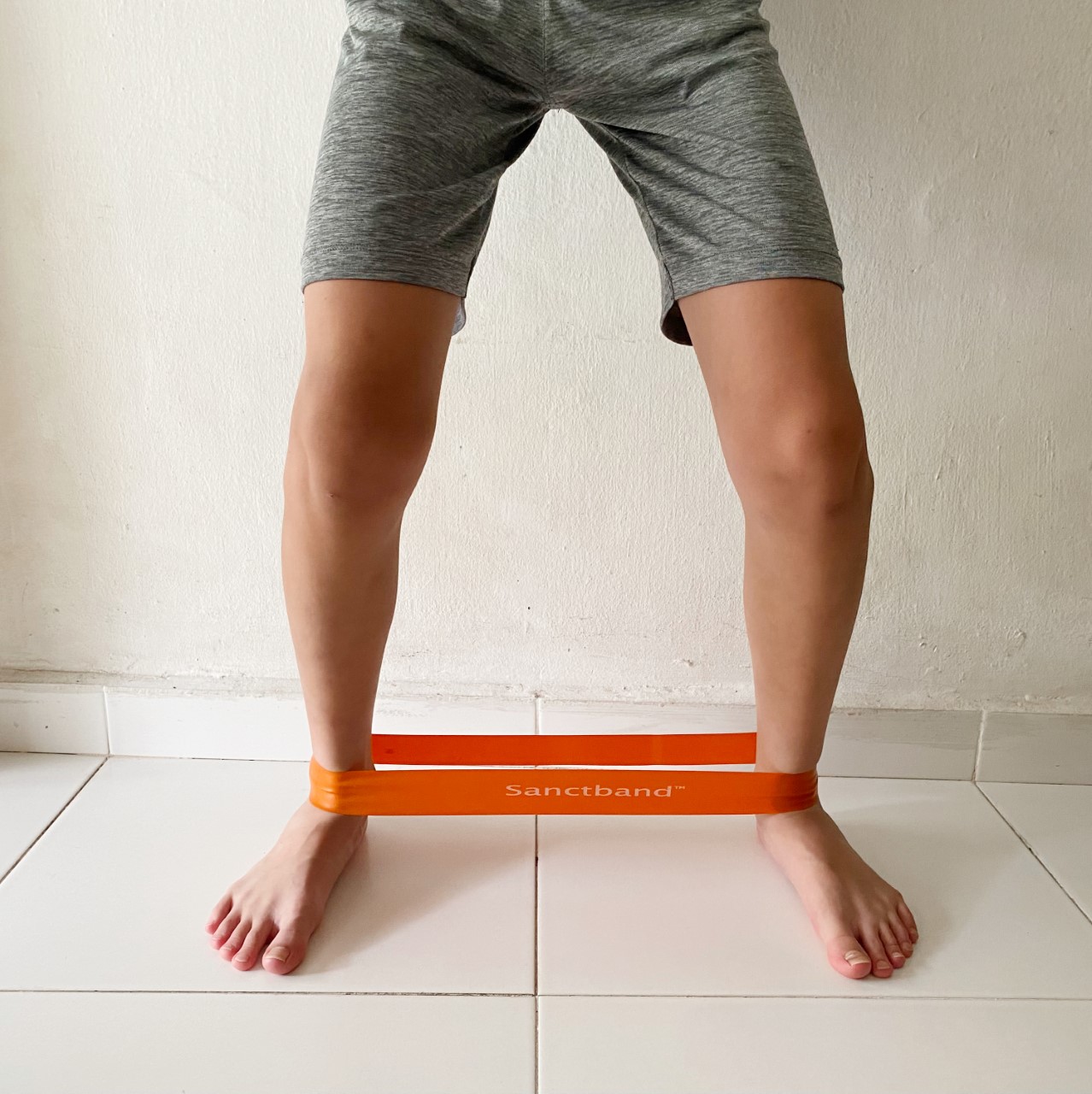
** For those of you wondering, there were no standardized protocol for hip and knee exercises in the various studies. The common hip exercise protocol included hip abduction against an elastic band while standing and with weights in a side-lying position coupled with hip lateral rotation against an elastic band while seated and hip extension (3 sets of 10 repetitions). 

Conversely, quadriceps strenthening in all studies generally involved weight bearing and non weight bearing exercises such as closed kinetic chain exercises, seated knee extension, leg press, squatting and stretching of hamstrings and quadriceps (3 sets of 10 repetitions). 

Sunday, August 21, 2022

When is the Best Time To Exercise?

Good time to exercise
I was not a morning person when it comes to exercise/ training before I started work. I used to train mostly in the late afternoons. After starting work as a physiotherapist and seeing patients the whole day, it often left me too tired to train after work. It got worse when I had to help out with treating the athletes at national team trainings. These trainings often ended past 9 pm, leaving me with little time to train.

If you are a sports fan, you will know that NBA Finals, Champions League matches etc are all played in the late evenings. Almost all track and field world records are set in the evening as well. However, most road running world records, including Eliud Kipkoge's sub 2 hour marathon, are set in the morning.

It is not all physiological reasons though. Big track meets, NBA and Champion League Finals are at a venue, unlike mass participation endurance events which require early start times for road closures and avoiding hot weather. So when the human body is primed for maximal performance?

Evidence regarding circadian rhythms and physical performance suggest that we are at our best in the late afternoon or early evening. For most people, this is between 4-7 pm. 

A meta-analysis of 29 articles (63 were found but only results from 29 were suitable) were divided into four categories, jump height, anaerobic power (30 sec cycling sprint), hand grip strength and endurance exercise.  

Strong evidence showed that for jump height and anaerobic power the peak is between 1-7 pm while some evidence shows that hand grip strength peaks between 1-9 pm. 

However, most of the studies failed to find any significant difference for endurance exercise. Perhaps it may be difficult to look for subjects willing to run a series of 10 km runs (or longer) compared to hand gripping tests or jumps or bicycle testing.  Note that a higher core temperature may hinder rather than help endurance exercise.

During the late afternoons is when our core temperature is highest having risen from its lowest point when you get up in the morning. A warmer body means faster metabolic reactions, faster transmission of nerve signals and muscles that are warmed up and have more range. Definitely better for injury prevention.

If you shift your sleep-wake cycle by a few hours you can shift the timing of your peak performance by a few hours. The F1 drivers do this by remaining in their own timezone from Europe when they do the night race in Singapore.

However, there are advantages to exercising in the morning since you can typically control your mornings more than your evenings. All kinds of hurdles or excuses can pop up throughout the day that can prevent you from being consistent with your exercise. You may have to ferry your kids, get errands done or work late.  

Most endurance events like triathlons and marathons begin in the morning. If you want to train yourself to race under such conditions, training in the morning certainly helps. I used to wake up at 4.30 to attend swim training at 5.30 am by riding my bicycle there. Early morning race start times didn't bother me anymore after I got used to that.

Your circadian rhythm regulates blood pressure, body temperature, metabolism, alertness amongst other physiological functions. Tweaking your circadian rhythm can 'teach' your body to perform better at certain times. Just like when you need to adjust to a new waking time on your alarm clock, your body will get used to the change and you may even wake up before the alarm goes off after a while. 

Once you determine that a particular time of day works best for your schedule, body, event etc, you can start to train your body to match it. If you exercise in the morning, your body will learn to adjust to exercising at that time. You will get used to waking up, eating, drinking, using the toilet etc. After a while it becomes second nature.

Evidence may show that the best time of the day to exercise is the late afternoon to early evening. My take is exercise at whatever time suits you best as some exercise is better than no exercise, especially in Singapore when the weather is warm year round. Researchers in Guadeloupe failed to show any difference in the time of day for sprint cycling, squat and jump performance because it was always warm and humid there. And Guadeloupe's weather is just like Singapore.


References

Aoyama S and Shibata S (2020). Time of Day Dependent Physiological Responses To Meal And Exercise. Frontiers Nutr. DOI: 10.3389/fnut.2020.00018

Blonc S, Perrot S, Racinais S et al (2010). Effects Of 5 Weeks Training At The Same Time Of Day On The Diunal Variations Of Maximal Muscle Performance. J Strength Cond Res. 24(1): 23-29. DOI: 10.1519/JSC.0b013e3181b295d6

Knaier R, Qian J, Roth R et al (2022). Diurnal Variation In Maximum Endurance And Maaximum Strenhth Performance : A Systematic Review And Meta-Analysis. M Sci Sports Ex. 54(1): 169-180. DOI: 10.1249/MSS.0000000000002773

Sunday, August 14, 2022

Are We Losing Talented Young Athletes?

Picture by Richard Seow from Flickr
I came across a really interesting article (Abbott et al, 2020) this week measuring adolescent maturation with respect to sports. 

Our Singapore national school sports competitions use chronological age to categorize adolescent athletes. Australia does the same when it comes to their age group swimming competitions.

The researchers in the paper use a handful of physiological measurements to come up with an estimate of an adolescent's relative age. So, for two 13 year olds born exactly on the same day, one of them can be an early maturer with a relative age of say 13 years and 7 months. The other adolescent can be a late maturer with a relative age of 12 years and one month. They both have the same birthdate, however, in practice one has a 18 months maturity advantage over the other.

The table in the picture above shows the researchers' maturation measure applied to age group swimmers in Australia competing in the 100 m freestyle. You can see that all the swimmers at the top end of this Australian age group are those in the "early" or "early-normal" categories. They are the faster swimmers.

Look at the "late" maturers column, it's a whole long line of zeros. If you look at it from another perspective, it also means that Australia is losing 50 percent of their talent pool. These swimmers probably started swimming with the rest of their age cohort, but by age 13, they probably all became disillusioned and dropped out. So where did all these slowly maturing kids go? Did they all decide to play computer games instead? Hopefully, they found another sport to participate in.

To find their next generation of elite swimmers, Australia is using a high stakes, winner takes all competitive swim competitions. The effect of those competitions was to chase away half the cohort of young swimmers away from swimming.

Now, if we relate this to Singapore's own school sports scene, does this mean that the Singapore Sports School and other schools' Direct School Admission (DSA) selection criteria is also slightly flawed? Perhaps that can explain why many of these 'talented' kids who are early maturers (at 13 years old when they go to Secondary school) don't carry on competing and drop out. 

If you read my earlier post, it it reasonable to say that some of these early maturing athletes in the Sports School or DSA programs would have exceled in any physical screening tests. Just like my classmate in that post who reached puberty and had his growth spurt earlier than us in Primary school. He was physically superior to everyone else. That's how he won all his track events earlier. When the rest of us "caught up" when we hit puberty, he didn't have that advantage anymore.

Having been raised on victories from young, they may not comprehend or accept defeat. Early victories may have paved the way for defeat and giving up eventually.

Please take note that I am not criticising the Singapore Sports School or the DSA programs currently in place. I am just suggesting that our local childhood talent selection programs, on closer examination, are not as meritocratic as they may seem.

A child/ adolescent who is a late maturer may not necessarily be not talented in sports. It may be a lack of motivation. No child or adolescent will persist or strive in an athletic activity if they do not feel they are competitive with their peers.

My wishes for these national schools competitions are that that they can provide opportunities for students to experience joy (and of course heart break) from exercise and competition. To lay down life-long habits of physical activity. And finally to provide those with ability for futher higher level competiton to represent their country. 


Reference

Abbott S, Hogan C, Castiglioni MT et al (2020). Maturity- related Developmental Inequalities In Age-group Swimming: The Testing of 'Mat-CAPs' For Their Removal. J Sci Med Sp. 24(4): 397-404. DOI: 10.1016/jsams.2020.10.003