Showing posts with label deep water running. Show all posts

Friday, March 4, 2022

Hydrotherapy/ Deep Water Running Again!

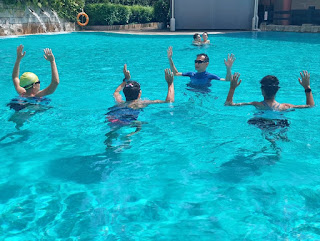
Since Covid started, we have not been able to bring our patients to the pool for hydrotherapy or aqua-based rehabilitation. 

The public pool we were using is only opened for lap swimming now. We are very grateful to The Ripple Club. It was with their help that we got access to a pool for our post-op patients today.

They are all surrendering....
This is not a typical hydrotherapy session in a shallow pool like what hospitals may have. Those are often indoor sessions in waist or chest deep, warm water. Range of motion exercises and light strengthening exercises are normally done then.

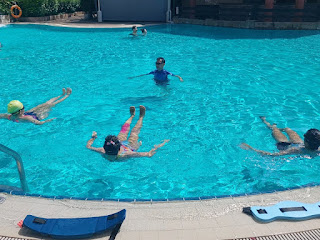
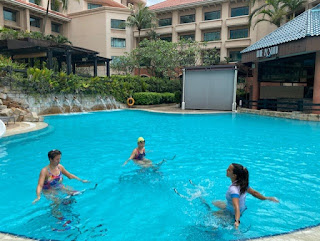
For our sessions, the pool is usually 1.8 metres deep. The patients use an aqua running belt to keep them afloat.

One patient had her hip labrum repaired recently while another (a triathlete) had an OCD bone fragment removed surgically. I often include aqua running techniques (or deep water running) to produce a training effect for them since they definitely cannot run on land yet. 

If done correctly, the arms, shoulders, lower limbs and abdominal muscles are involved. For those who cannot take too much impact, this is a very good alternative since water is 773 times more resistant than air. The harder you move your arms or legs, the more drag force or resistance you encounter.

Sculling with aqua belts off
This is a very useful session for rehabilitation work and training for athletes and patients. It allows injured athletes or post operative patients to recover quicker and allows others to undertake higher intensity (water based) training, with lower incidence of injury. 

It will not do the aqua training technique justice for me to describe how you do it in just a few short sentences, please contact us if you need more information on this.


References
Davidson, K (2000). Deep Water Running Training Improve V02 max in Untrained Women. Journal of Strength and Conditioning Research. 14 (2) 191-195

Dowzer, CN and Reilly, T (1998). Deep Water Running. Sports Exercise and Injury. 4: 56-61

A big thank you to Alicia and Yannick from The Ripple Club for letting our patients try their water bikes.

*Thanks to Edmund Miranda from The Ripple Club for taking the pictures too.

Friday, September 8, 2017

Lumbar Spondylolisthesis But No Real Deficits So Far


Have a look at the MRI and you can see a very obvious spondylolisthesis in my 38 year old patient's lumbar spine at the L5-S1 area. The last time I saw one so obvious was when I was working at the Singapore Sports Institute in a young gymnast in 2001.

Spondylolisthelis is a condition in which one vertebra slides forward over the vertebra below it. In simple terms, it means that there is a forward slip of one vertebra relative to another.

From what my patient says, there wasn't any traumatic incidents. He complains of lumbar area aches in the past year.  Often there is discomfort over his L buttock and tightness down his L outer thigh at the end of the day. He is still able to exercise including running and playing football. Other than that he hardly has any other symptoms.

His surgeon has suggested surgical intervention to stabilize his spine at the end of next month. Looks like lots of rehab after surgery.


Friday, July 7, 2017

Finding Our Way Back To Fitness

My wife resting and still not feeling quite right after 11 days
It definitely happens to us runners at some point. We get sick, busy or injured. Well, it just happened to my family.

First my wife fell sick last Tuesday. She had a really bad sore throat, viral fever and was feeling really terrible. She thought she could self medicate and had to take two Panadol tablets thrice a day "just to barely function" in her words. I brought her to see the doctor on Thursday and she got better with the stronger medication given by the doctor.

On Friday, my two and half year old boy woke up with a fever. Oh dear, my wife groaned, she had passed it to him. We had very little sleep that night as his temperature kept spiking during the night. Our helper had to help us throughout the night too. I ended up not going to my usual Saturday morning long bike ride.

Despite not sleeping well, I managed to see patients the whole Saturday. When I got home, my older seven year old boy was running a temperature.

We spend the whole Sunday resting and trying to keep everyone comfortable at home. Thanks to my helper who decided to forgo her off day to help us. Thanks Ami!

I was the last one standing, the "last of the Mohicans" or so I thought. I woke up with a fever at 3 am on Monday morning! Grrrrrrr. I thought I was strong/ healthy enough not to catch the bug but in the end I succumbed.

I ended up not working for the past few days. My wife still hasn't gone in to the clinic. Though she's feeling better, she just doesn't seem quite right. The older boy hasn't gone to school this whole week while the younger boy still gets a fever on and off. Now that was really strong bug that got us down.

A body at rest can and tends to remain at rest. My wife is just lamenting that her fitness is gone, poof just like that! How do we start running or exercising again?

If you've been away from running more than a week, the pool  is great for doing deep water running. If you prefer something land based, you should just try walking first. The goal is to be able feel strong going on a 30 minute walk. If that's too much try 10-15 minutes walking and build from there.

Next, add in some running. Throw in a 10-15 second run after walking  five minutes. If you feel good, you can continue with 10 seconds run / 40 seconds walk for 5-10 mins. Every other day add 3-5 minutes and you'll back on your way.

Your body will definitely tell you if you've done too much during your comeback- you just need to listen to it.

Hmmm, should I go for my long bike ride tomorrow?

Actually, my helper, Ami, is the last one standing, "the last of the Mohicans". Good on you Ami!

Friday, June 23, 2017

Please Help My Swollen Knee


My patient sent me the above picture recently asking for help. Her knee became swollen after a recent run. After icing her knee, she decided to use some "imitation/ copy cat" Kinesio Tapes but that didn't resolve the swelling and worse still gave her an allergic reaction.

Knee joint effusions (or swelling) are usually caused by the knee joint producing more synovial fluid due to aggravating factors causing damage to the joint.

As little as 5 ml of fluid can increase pressure within the knee joint. This can be a source of discomfort and concern for the person affected.

It takes a very small volume of fluid in the knee (20-30 mls) to result in biomechanical changes. The quadriceps will be inhibited as a result (meaning you are less willing to use that muscle) and strength decreases rapidly.

It has also been found that swelling in the knee affects joint mechanics particularly during landing tasks. If someone has effusions in the knee, they tend to land with greater ground reaction forces (or impact) and in greater knee extension (or straightening). This results in more forces transmitted to the knee joint and its ligaments. So you can't run and jump quite as well.

When we see knee joint swelling in our clinics, we try to remove the swelling pronto. Flossing the knee joint, using correct Kinesio taping techniques with genuine Kinesio tapes definitely helps.

My favorite is of course aqua based rehabilitation/ deep water running to take advantage of hydrostatic pressure to help with the swelling. This also allows for quadriceps/ hamstrings strengthening early on without additional loading.

If the patient has more severe effusions, we may suggest altering their gait temporarily (we call this pain free walking), using non-steroidal anti inflammatory medication (NSAIDs) or even suggest they get the joint aspirated (I've tried it, it hurts like crazy).

Once the swelling settles, it will quickly and significantly reduce internal pressure in the knee as well as improve quadriceps strength.

We will quickly select rehabilitation exercises to allow specific quadriceps muscle recruitment without increasing intra articular pressure with knee extension. This is usually done in positions of partial knee flexion (20-30 degrees).

Now you know. Come see us in our clinics if your knees are swollen.


References

Hart JM, Pietrosimone B et al (2010). Quadriceps Activation Following Knee Injuries: A Systematic Review. J Athl Trg. 45(1): 87-97. DOI: 10.4085/1062-6050-45.1.87.

Palmieri-Smith RM, Kreinbrink J et al (2007). Quadriceps Inhibition By An Experimental Knee Joint Effusion Affects Knee Joint Mechanics During A Single-Legged Drop Landing. AJSM. 35(8): 1269-1275. DOI://doi.org/0.1177/0363546506296417.

Saturday, March 11, 2017

Stress Fractures In Teenage Female Runners

Icing the shin
The Singapore National School's competitions are usually held between March and late May every year since 2009. And it's that time of the year again where we see many patients in our clinics with shin splints. Mostly adolescent and teenage girls and the occasional boy.

Why are girls more susceptible to shin splints and stress fractures? Well, some new data shows that if teenage female athletes don't eat enough to support their training, there will be complications regarding their subsequent training and health.

The study tracked 323 female athletes at Stanford University in 16 different sports including cross country running. Bone scans and questionnaires were used to assess the runners based on the components of the "female athlete triad" consisting of "low energy availability, with or without disordered eating, menstrual dysfunction and low bone mineral density. "

Risk status were calculated based on an article published in the British Journal of Sports Medicine  in 2014. Have a look at Figure 4 in the article if you're keen to know more about the calculations.

Looking only at the cross country runners (47 runners) data, half the runners were classified as low risk, and three of those later developed stress fractures.

Sixteen of the runners had moderate risk and 50 percent of these developed stress fractures within a year. These girls were about four times as likely to get injured compared to the low risk group.

Seven runners were in the high risk group and five of them developed stress fractures. They were nearly six times as likely as the low risk group to get injured.

Well, if you're thinking like me, not so good news for the girls if you're a runner and in the moderate to high risk group.

The researchers suggested the following guidelines for female athletes in the moderate to high risk group. The athletes need to ensure they're getting enough calories to support their training along with calcium and Vitamin D. Their menstrual function, bone health and nutrition needs to be monitored on an ongoing basis.

Higher risk athletes may have to consider using low impact cross training more often in their weekly routine. Good sleep and recovery are important too.

Stress fractures occurred mostly in the foot for the low risk athletes, probably as a consequence of biomechanics and jumping sports (due to higher forces).

In the higher risk categories, many of the stress fractures were in the sacrum, pelvis and femoral neck (where the bones tend to be softer). These areas may be due to weakened bone rather than biomechanical forces.

So all the doctors, physiotherapists, physical education teachers, coaches, heads of departments and administrators in charge of female teenage athletes reading this post, please take note.

Reference

Tenforde AS, Carlson Jl et al (2017). Association Of The Female Athlete Triad Risk Assessment Stratification To The Development Of Bone Stress Injuries In Collegiate Athletes. AJSM. 45(2): 302-310. DOI: 10.1177/0363546516676262.

Tuesday, January 21, 2014

The Good And "Bad" Of Swimming

Picture by RichSeow @ flickr.com
In many ways, swimming has the benefits of most land based aerobic exercises like running, walking, cycling etc. Swimming has been also found to effectively improve cardiovascular fitness and muscle mass while also effectively reducing blood pressure.

Since swimming is done in water, it cools you down and there is a lot less impact compared to land-based exercises and heat related illnesses. Chances of  injuries are also much lower. This is the main reason why our athletes/ patients can do rehab almost straight after surgery while maintaining their fitness levels.

Despite all its advantages, here's one real drawback regarding swimming. It seems to make you eat more! At least that's what the researchers found.

Researchers found that swimming (whilst beneficial in improving cardiovascular fitness) is not particularly effective at promoting weight loss. In fact, those who swam (compared to those who brisk walked, jogged or cycled) tended to put on weight. (There were more than 15 000 adults studied over a decade).

I'm always starving after I swim. Now I know why I feel like I can eat a horse after swimming. Please share your views.

References

Tanaka H (2009). Swimming Exercise: Impact Of Aquatic Exercise On Cardiovascular Health. Sports Med. 39(5): 377-387.

Littman AJ et al (2005) Effects Of Physical Activity Intensity, Frequency, And Activity Type On 10-year Weight Change In Middle-aged Men and Women. Int J of Obesity. 29: 524-533.


Tuesday, December 31, 2013

It's Never Late To


...... start exercising that is.
Picture by Brian Dees from flickr.com
After my bike accident, I went to the pool 4-5 times a week for rehab rehab. There was this older gentlemen (I think he's at least 70) that I saw frequently. He would cycle to the pool and swim lots of laps. He looked really strong and I remember saying to myself that I would like to be strong and healthy like him when I get to his age.

Well I guess research is good at confirming what I believe this older gentleman is.

British researchers studied 3454 adults over 8 years who were healthy and disease free at the start of the study. Their average age at the start of the study was 63.7 years young.

The adults were considered healthy if they did not develop any major chronic diseases, depressive symptoms or any physical or cognitive impairment during the 8 years of the study.

19.3% (or almost a fifth) made it to the final follow-up healthy. Those who exercised moderately or vigorously at least once a week were on average 2.67 and 3,53 times more likely to experience healthy ageing compared t those who were inactive.

What's more amazing was that those who had only become physically active during the study had a higher likelihood of experiencing healthy ageing than those who did not.

The researchers concluded that significant health benefits were even seen among participants who became physically active relatively late in life.

Today's the last day of the year and tomorrow is a brand new year. It's a good time for you to start exercising regardless of whether you are young or old.

Reference

Hamer M, Laviole KL et al (2013). Taking Up Physical Activity In Later Life And Healthy Ageing: The English Longitudinal Study Of Ageing. BJSM. doi:10.1126/bjsports-2013-092993.


Wednesday, June 19, 2013

Who Came For Hydrotherapy Today?

Who's that jumping?
I've been going to the pool fairly regularly (especially since that's the safest exercise/ rehabilitation I can do after my bike accident and often alone too.

Occasionally I get Ronald Susilo (former Olympian, Sportsman of the Year) joining me. Recently he was actually planning to play in the current ongoing Li Ning Singapore Super Series Badminton Open and he requested joining me at hydrotherapy to do some conditioning. (Alas, he did not get his chance, but that's a different story).

Now, Ronald and I go back a long way, I've been treating Ronald since the late 1990's, way before he became a household name in badminton. We've done hydrotherapy previously while he and the rest of the Singapore Badminton team were preparing for the Olympics.

And, surprise surprise, he showed up with 2 of his young charges today at the pool for some conditioning with him, with me taking charge - just like the old days.
Ronald taking a rest
Now, it was with dismay that I read in the papers today that all 3 of our male local shuttlers were knocked in the qualifiers yesterday and so Singapore will not have any representation in the main draw of the Men Singles today.

So hopefully, with today's session and more, Ronald's young players will do well enough to do us proud at subsequent Singapore Open's and more.

All the best at the tournament, Team Singapore.

Friday, January 21, 2011

Shape Magazine - Aqua Based Rehabilitation

Sports Solutions featured in this month's (January)  Shape magazine for our Aqua Based Rehabilitation (Deep Water Running) on pages 102-105. Go take a look.

Please also see this and this.

Tuesday, May 12, 2009

Shin Splints Or Stress Fracture?


I've seen quite a few of my patients recently with shin pain so I thought I'd write about it. This condition can usually be caused by any activity that involves running, jumping or even extended periods of walking. Patients usually present with pain at the beginning of exercise. During the initial phase, the pain may disappear during the warmup or after 15-20 minutes of exercise, but returns for several hours after exercise. In the more severe cases, pain is usually present during training and aggravated during daily activities like walking, squatting or climbing stairs. There is often pain at rest as well. The pain is often described as a dull, aching discomfort of varying degrees of intensity.

Left untreated, it can progress to a stress fracture in your tibia (or shin bone). Which is exactly what happened to one of my patients.

The picture shown above is the x-ray of my patient's stress fracture. The arrow depicts the callus formation of thickening of the bone indicating a stress reaction in the bone. Usually a bone scan is needed to detect a stress fracture as an x-ray only picks up the callus formation (about a month later) as the bone is healing.

The term "shin splints" refers to pain along your tibia and this is usually caused by too much pulling of your muscles along their attachments along the bone. Research has shown that it is usually the tibialis posterior and soleus muscles that causes this condition. With repeated pulling (or stress), this causes the shin bone to be irritated and pain results. That is why this condition is also known as medial tibial stress syndrome. Milder cases are treated fairly easily. Most physiotherapists will ask their patients to rest, ice the painful area, change footwear and modify your training routine to prevent shin splints from recurring. The cause of your pain should be addressed rather than just treating the shin pain alone.

Most of the time shin splints occur from overuse. It is commonly seen in athletes who suddenly increase their duration or exercise intensity of training. Overpronation is often listed as one of the common causes of shin splints. Now if you've been following our blog article Pain Free Running or running with the Physio or Sports Solutions team, then you will be happy to know that you can run pain free and even avoid getting shin splints. Our athletes with shin splints or stress fractures often do their rehabilitation in the pool as well to maintain their fitness.

I have had stress fractures in both legs before, early in my racing days, when I was just competing in track and field events. This was before I started competing in triathlons of course. I know exactly how frustrating it can be not being able to run. Will be most willing to help if you need any advice on this.

Please read this for more on shin splints.

Reference
Thacker SB, Gilchrist J, Stroup DF and Kimsey CD (2002): The prevention of shin splints in sports: a systematic review of literature. Medicine and Science in Sports and Exercise 34: 32-40.

Thursday, April 30, 2009

Aqua Based Rehabilitation (Deep Water Running)

Recognize anyone?
If you've ever wondered how our injured national athletes still keep most of their hard gained fitness, read on.

Their pool based water work is often the key to a quick return. For those not injured, the swimming pool can also be used as a great training tool in addition to your other workouts. Look closer at the 2nd picture and you may recognize some of our badminton players who have been to the last 2 Olympics- Ronald Susilo, Kendrick Lee, Xing Aiying and Li li etc. Our Singapore badminton team went to the pool once a week at least during periods when they were training at their hardest so they can train in a setting with little or no impact to minimize injuries with yours truly leading the session in the water with them.

Now, this is not a typical swim training session like you might think. As most land based athletes are not good swimmers, I often use aqua running techniques (or deep water running) to produce a valuable training effect for them. It would take a far longer time to get them to be of a good swimming standard to get the same effect from swimming and since time is a precious commodity in sports rehabilitation hence the use of deep water running. Moreover, most of these athletes or patients are involved in some land based or running sports, so swimming offers less transferable benefits or movements that are similar to their land based activities.

Done right it is a full body workout involving the legs, arms, shoulders and core muscles.It is also a good alternative to pounding the streets day after day. A study comparing a group doing deep water running versus another group road running found both training programmes produced similiar improvements in V02 max levels.

Water is about 773 times more resistant than air, so it can strengthen all key running muscles. Water is also isokinetic, meaning the water resists you as much as you resist it. The harder you move your arms or legs through the water, the more drag force or resistance you encounter. What's more challenging? Doing the workout without a flotation device or belt. I often get my athletes to do the entire session without one to push them harder.

The pool is a very good and versatile environment for rehabilitation work and training for athletes and patients. By including this session, you can allow for injured athletes or patients to recover quicker and allow others to undertake higher intensity water based training. It will not do the aqua training technique justice for me to describe how you do it in just a few short sentences, please contact us know if you need more advice on this. Physio Solutions conducts deep water running classes, give us a ring to find out more.

References
Davidson, K (2000). Deep Water Running Training Improve V02 max in Untrained Women. Journal of Strength and Conditioning Research. 14 (2) 191-195

Dowzer, CN and Reilly, T (1998). Deep Water Running. Sports Exercise and Injury. 4: 56-61