![]() |
| R subacromial bursa |
Sunday, January 14, 2024
Do Not Inject The Bursa
Sunday, September 24, 2023
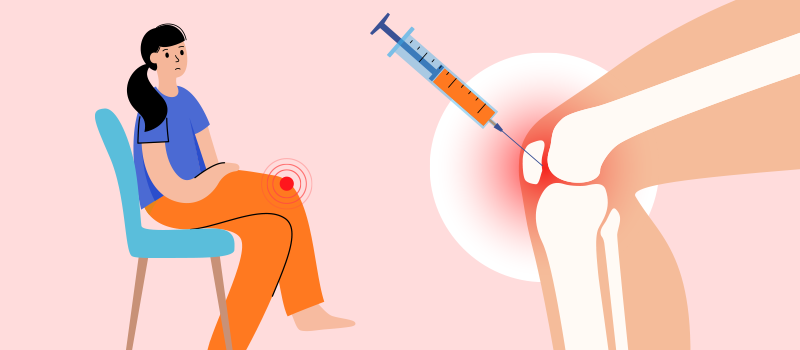
Steroid Injections Accelerate Damage To Joint Surfaces
![]() |
| Picture from Ortho Arizona |
Other than providing brief pain relief, the pain often comes back. I wrote earlier this year that steroid/ cortisone injections significantly increases the risk of tendon tears.
Perhaps it's time to think more than twice before you allow anyone to inject into you knee joint. Make it any other joint for that matter as latest published research shows that individuals who got IACS were twice as likely to have harmful effects on knee articular cartilage structure than those who received no or placebo treatment.
![]() |
| Different stages of articular cartilage damage |
They found 6 studies consisting of a total pf 1437 participants. The estimated effect of IACS on articular cartilage structure showed significant odds of it worsening as measured by joint space narrowing and articular cartilage thickness. The authors concluded that their meta- analysis showed that IACS increases the likelihood of knee joint deterioration.
Other than increasing the risk of tendon tears, steroid/ cortisone injections into knee joints may be doing more harm than good by accelerating joint surfaces degeneration. The short lasting pain relief is definitely not worth the long term consequences of your articular cartilage degenerating.
Reference
Ibad HA, Kasaeian A, Ghotbi G et al (2023). Longitudinal MRI-defined Cartilage Loss And Radiographic Joint Space Narrowing Following Intra-articular Corticosteroid Injection For Knee Osteoarthritis: A Systematic Review And Meta-analysis. Osteo Imaging. DOI: 10.1016/j.ostima.2023.100157
Sunday, February 19, 2023
Steroid/ Cortisone Injections Significantly Increase Risk Of Tendon Tears
![]() |
| Picture from BuzzRx |
Remember my true story when I used to work at the Singapore Sports Institute (formerly Singapore Sports Council). Back then, I used to treat the badminton players frequently and traveled with them on most of their training trips and competitions. (Ronald Susilo and I pictured below after he beat world number one Lin Dan at the Athens 2004 Olympics).
![]() |
| I'm more excited than Ronald |
Tragedy struck at the 2007 SEA Games in Thailand. He tore a forearm muscle while playing at the Games. I was tasked with accompanying him back to Singapore for a visit to the surgeon to repair it.
I've accompanied Ronald for all his sporting surgeries. His shoulder in 2004, Achilles in 2005 and right forearm in 2007. These were his words to the operating surgeon, "Gino knows my body better than I, he's been around for all my operations."
As usual I was waiting outside the operating theater for Ronald when they operated on his forearm. The first words the surgeon said to me when he came out of the operating theatre was, "We found cortisone still in his arm." My interpretation was that he meant too much steroid/ cortisone had been injected into Ronald's forearm. That probably caused the muscle to tear. Just like what the study by Lin et al (2022) had found.
Yes, there would definitely be occasions where a steroid/ cortisone injection is needed. However, speaking from personal experience, if you're an athlete or participating in sports regularly like my patient, please reconsider if your doctor suggests a steroid/ cortisone injection. There are definitely other ways to treat your pain/injury besides getting a steroid/ cortisone injection. You definitely do not want to risk tearing any muscle or tendon after that.
Sunday, July 5, 2020
Iliotibial Band Pain In Runners
![]() |
| The ITB originates from the TFL |
Having previously suffered from Iliotibial band or ITB syndrome myself before, I'll naturally read any article I'd come across about the ITB.
![]() |
| The ITB over the Vastus Lateralis muscle |
I'm not a fan at all when it comes to injecting steroid (or cortisone) to treat any sporting injuries. I written previously that often the cause of the problem is from the hip. For best results, you treat the cause of the problem.
As I've written previously, if you're an athlete or exercising regularly, you definitely do not want a steroid/ cortisone injection since there is a very high chance of degenerative changes in the surrounding area of the steroid injection. You can read about how my patient tore his forearm flexor tendon after repeated steroid injections.
Anyway, what intrigued me about this article was the small sample size and how long it took to recruit the runners (it took two whole years). The authors managed to recruit 45 runners but only 18 fulfilled the criteria and finished the study.
There was an attempt to have a longer follow up period, but there was too much variability in the second phase treatment of the condition. Their return to running, distance ran, rehabilitation program, change in footwear and use of orthotics etc.
Most of the eligible runners did not want to stop running during the 2-week intervention period. Exactly what I said about athletes (not wanting to rest) in my interview which you can see here. This shows the challenge of recruiting runners for research.
How about you? If you were recruited for a running research and asked to stop running for 2 weeks for the sake of research, would you comply? I'd like to hear your views.
Reference
Gunther P and Schwellung MP (2004). Local Corticosteroid Injection In Iliotibial Band Friction Syndrome In Runners: A Randomised Controlled Trial. BJSM. 38(3): 269-272. DOI: 10.1136/bjsm.2003.000283.
Sunday, August 4, 2019
What? $3000 For A Steroid Jab!
![]() |
| Straits Times 030819, page B5, home section |
On the flip side, some doctors stopped giving the steroid/ cortisone injections after that case.
Here's a true story when I was working at the Singapore Sports Institute (formerly Singapore Sports Council). I've never written about this before and I guess it's time to put it on record. Back then, I used to treat the badminton players frequently and followed them on training trips and competitions.
In 2006-2007, Ronald Susilo was having right elbow pain, his playing arm. He was subsequently injected with steroids (cortisone) to help with the pain so he could train and compete.
Tragedy struck at the 2007 SEA Games in Thailand. He tore a forearm muscle while playing at the Games. I was tasked with accompanying him back to Singapore for a visit to the surgeon to repair it.
I've accompanied Ronald for all his sporting surgeries. His shoulder in 2004, Achilles in 2005 and right forearm in 2007. These were his words to the surgeon, "Gino knows my body better than I, he's been around for all my operations."
As usual I was waiting outside the operating theater for Ronald when they operated on his forearm. The first words the surgeon said to me when he came out of the operating theatre was, "We found cortisone still in his arm." My interpretation was that he meant too much steroid/ cortisone had been injected into Ronald's forearm. That probably caused the muscle to tear.
Granted, there would definitely be occasions where a steroid/ cortisone injection is needed. However, speaking from experience, if you're an athlete or participating in sports regularly, please reconsider if your doctor suggests a steroid/ cortisone injection. There are definitely other ways to treat your pain/injury besides getting a steroid/ cortisone injection.
Here's a picture of Ronald after his left Achilles tendon rupture in 2005 at the World Badminton Championships. Kudos to him for coming back to play after each and every badminton career threatening surgery.
Monday, May 29, 2017
Steroid Injection Not Better Than Placebo For Low Back Pain
![]() |
| Picture by Army Medicine from Flickr |
Evidence that they (cortisone or corticosteroid injections) work no better than placebo is mounting though.
The article referenced below is a systematic review. A systematic review is a computer aided search for all randomized and clinical controlled trials, meaning it's top of the line in terms of quality.
Researchers pooled data together from 30 placebo controlled studies of epidural steroid injections for radiculopathy (back pain that radiates to legs) and eight studies for spinal stenosis (back/ neck pain caused by narrowing of the spinal canal).
For radiculopathy, the steroid injections provided only short term relief. Over time, they were not more effective compared to placebo injections. They also did not reduce the need for surgery later for patients with more severe conditions.
The pooled data was similar for spinal stenosis.There was only some moderate temporary pain relief after the corticosteroid injections. There were no differences between steroid injections and placebo injections in pain intensity or functional ability lasting six weeks or longer after the injections.
The authors did note that some studies did not have many subjects while others had shortcomings their methodology.
The researcher in charge also suggested that there was probably some financial motivation to carry on using steroid injections despite the lack of evidence for its effectiveness. There is also a worry among professional societies (for doctors) due to implications for insurance coverage.
Other mentioned less selfish reasons is that doctors see their patients in horrible pain and concede that they do get some pain relief after the injections.
Please come to our clinics if you need help with your low back pain. We definitely do not give steroid injections.
Reference
Chou R, Friedly J et al (2015). Epidural Corticosteroid Injections For Radiculopathy And Spinal Stenosis: A Systematic Review And Meta-analysis. Ann Intern Med. 163(5): 373-381. DOI: 10.7326/M15-0934.
Friday, October 29, 2010
Do You Need That Cortisone (Steroid) Injection?
A major new review article published in the Lancet just last week raised major doubts on the efficacy (or wisdom) of using cortisone on tendon problems. Yes, the authors found plenty of evidence (in over 4 dozen high quality randomized controlled trials) that corticosteroid injections reduced patients' pain in the short term, but the effects were not great in the intermediate and long term. In fact patients receiving the injections had a much lower rate of recovery than those who did nothing or received physiotherapy (at 6 and 12 months). This was especially true for patients with tennis elbow pain, rotator cuff (swimmer's shoulder) pain and Achilles tendon pain.
There are more evidenced-based treatment for tendinopathy other than cortisone injections, ultrasound, massage, interferential currents etc. We at Physio and Sports Solutions practice evidenced-based physiotherapy (neural stretching, Mulligan MWM's, eccentric muscles strengthening exercises and Maitland joint mobilizations etc) to treat you. Come let us help you with your tendon injuries.
Reference
Coombes BK, Bisset L, Vicenzino B (2010). Efficacy And Safety Of Corticosteroid Injections And Other Injections For Management of Tendinopathy: A Systematic Review of Randomised Controlled Trials. The Lancet. Epub on 22 October 2010.
*Picture by Ballyscanion/Getty Images.