Sunday, November 27, 2016

Are There Any Benefits In Running With Zero Drop Shoes?

My wife's zero drop running shoes
Although you don't see it as much now, the minimalist type running shoes were the rage all few seasons ago. These minimalist type (and not the barefoot type) usually have a relatively low heel to toe drop. Meaning the height in the midsole and the outsole at the back of the shoe is almost level and/or no difference in height.

One proposed benefit of zero drop running shoes is that it may reduce injury. Shoes with a large drop encourage severe heel striking which can contribute to knee injuries. With zero drop shoes, it may also allow your feet to land as if you were not wearing shoes which helps to distribute impact forces.

Shoes with a high drop may also tilt you forward too much and contribute to alignment and compensatory discrepancies.

If you visit the running section of most running stores now, most midsoles of current running shoes are almost back to before when they were much thicker. But many manufacturers have retained the zero drop while offering plenty of cushioning like the Hokas and Altras.

A recent study however found that a shoe's heel to toe drop may not have have anything to do with running injuries.

The researchers studied 533 non elite runners wearing running shoes with 0, 6 or 10 millimetres (mm) drop for six months. The running shoes were 2l mm in the heel and forefoot, 21 mm in heel and 15 mm in forefoot and 24 mm in heel and 14 mm in forefoot respectively. The shoes were otherwise similar.

25 percent of the runners reported being injured during the six month study period. An injury was defined as leg or lower back pain that resulted from running and prevented planned running for at least one day.

The main finding of the study was that injury rates among the three groups were similar, regardless whether their shoes had a heel to toe drop of 0, 6 or 10 mm.

However, among the runners who ran more frequently, those in the 0 or 6 mm drop shoes had a higher injury rate than the frequent runners with a 10 mm drop.

The researchers suggested that that this may be due to the runners transitioning to fast from their regular running shoes to zero drop shoes leading to increased injury rates as 78 percent of the runners recruited in the study hadn't run in zero drop shoes before.

I remember when I was racing cross country races as a kid we used to train in heavier cushioning shoes and then switched to racing flats for the race. It was very common to have sore calves after the first few races of the season as I've not done enough running in the racing shoes (which had lower drop than the training shoes). Yes, racing flats back then were very similar to the zero drop shoes now.

It was more apparent (sore calves) switching to racing spikes for the track training and track meets when cross country season ended and I raced in track events.

As I always tell my patients, their running technique is much more important than their running shoes. Be sure to rotate your running shoes to minimise injuries too.

Reference

Malisoux L, Chambon N et al (2016). Influence Of The Heel-to-Toe Drop Of Standard Cushioned Running Shoes On Injury Risk In Leisure-time Runners. A Randomized Controlled Trial With 6-month Follow-up. AJSM. 44(11): 2933-2940. DOI: 10.1177/0363546516654690.


Now, this is what I'll call a racing flat

Sunday, November 20, 2016

Patient With "Shoulder Tendinitis" Not Better After Medication

Can you guess what's wrong with my patient's shoulder?
Just by looking at the picture above, can you guess which shoulder was giving my patient problems? I also showed the picture to some of my staff and asked them "what can you see from this picture?"

Alright, for those who can't tell, here are some more clues. My patient came in with some neck pain and a very uncomfortable shoulder. He had seen his family doctor who told him he had tendinitis in his shoulder and gave him some NSAIDS (non steroidal anti inflammatory drugs).

However he did not get much better with the medication. He still had some neck discomfort and couldn't raise his arm above shoulder height. Lying on his affected side made his shoulder worse and he could only sleep supine.

At first I too thought the shoulder pain was referred from his neck. He mentioned that there was slight tingling sensation in his fingers occasionally too (which was why I thought the problem was coming from his neck). However I changed my mind after seeing he had trouble even lifting his arm sideways above shoulder height.

I told him that he probably had a tear in his L Supraspinatus muscle. If you look at the picture above carefully, you will see a hollowing above his left shoulder blade. There is also wasting in the muscle (or muscle atrophy) around the part where his neck on the left connects to his shoulder.

I was told later after an ultrasound scan that he had a full thickness tear in his left Supraspinatus muscle with retraction of the tendon! The doctor referred him for an MRI and said he may need surgery to repair the retracted tendon.

By the way, scientists have assessed biopsies from both people and animals with supposed tendinitis and found very few signs of inflammation in the tendons.

NSAIDs are commonly prescribed to reduce pain and inflammation of tendinitis. So if there is no inflammation, the medication is not going to help.

So the word tendinitis with the suffix "itis" means inflammation is misnamed since the condition has little or no inflammation. Researchers prefer the term "tendinopathy" meaning damaged or degenerating tendon.


Reference

Warden SJ (2009). Prophylactic Misuse And Recommended Use Of Non-steroidal Anti-inflammatory Drugs By Athletes. BJSM. 43(8): 548-549. DOI: 10.1136/bjsm.2008.056697.

Sunday, November 13, 2016

Physio And Sports Solutions Lunch 2016

Both our clinics came together to have lunch today at the Straits Kitchen restaurant in Hyatt hotel today.

This is our biggest turn out ever and a big thank you to all our staff and their familes/ loved ones who came. For those who were not feeling well or were travelling, well, here's what you missed.

Waiting for the start
We had quite a few tables
Guess who ate this for first round?
Guess who's the best eater?
Trying to fit everyone in the picture

Sunday, November 6, 2016

Hands-free Mobile Phone Drivers Roughly The Same As Drunk Drivers

Posed picture of me using mobile phone while driving
I'm sure you've seen lots of drivers driving and using their phone at the same time. I saw three drivers using their phones while standing at the back door of our clinic this morning, According to Singapore Traffic Police figures, at least eight drivers were caught using their mobile devices behind the wheel last year. Hopefully, you're not one of them.

Here's an article I found by a group of researchers comparing the effects of a variety of mobile phone usage conditions to different levels of alcohol intoxication on driving performance and vigilance.

Each participant had to complete a simulated driving task on two days, separated by a week's break. Driving performance was assessed by variables including time spent speeding, braking reaction time, time driving in target speed range, lateral lane position and speed deviation etc

On the mobile phone day, the participants performed the simulated driving task under the following four conditions. No phone usage, a hands free conversation, a hands free but cognitively demanding conversation and texting.

On the alcohol day, the participants performed the simulated driving task at four different blood alcohol concentration levels (BAC), 0.00. 0.04, 0.07 and 0.1.

Here's what they found. Under BAC 0.7 and 0.1 alcohol conditions, the participants spent less time in the target speed range, more time speeding and took longer to brake than in the 0.00 condition.

While using their mobile phones, participants took longer to brake in the hands free conversation, cognitively demanding hands free conversation and while texting. They also spent less time in the target speed range and more time speeding in the cognitively demanding hands free conversation and while texting.

When comparing both conditions, the hands free conversation was comparable to the legally permissible BAC level (0.04). The cognitively demanding and texting conversations were similar to the BAC 0.07 to 0.1 results.

According to the conclusion by the authors, simple hands free conversations while driving may not represent a significant driving risk (comparable to legally permissible BAC levels). Cognitively demanding hands free conversation and especially texting while driving represent significant risks to driving i.e. similar to when they were drunk!

In Singapore, it is currently illegal for drivers to hold any type of mobile device while driving. As long as you're holding it while the vehicle is moving you can be charged. Previously, you could not call or text on a mobile phone.

However, it is not illegal to use a mobile device if it is mounted on a holder or a dashboard. Wearable technology such as Google Glass or the Apple watch is not mentioned though.

So be safe while you're out on the roads (especially if you're cycling).

Reference

Leung S, Croft RJ et al (2012). A Comparison Of The Effect Of Mobile Phone Use And Alcohol Consumption On Drving Simulation Performance. Traffic Inj Prev. 13(6): 566-574. DOI: 10.1080/15389588.2012.683118.

Riding with one finger and giving cyclists a bad name
*Picture by Comrade King from Flickr.

Monday, October 24, 2016

Arches And Orthotics

Picture from article Scientific Reports
I've often been asked by my patients about whether they need orthotics. The following article I read will explain some of the research behind orthotics on how they can affect your running rather than just my opinion.

Each time we land on our arches when we run, energy is stored in our arches. This is free energy that doesn't require anything to activate. The researchers wanted to measure wanted to find out specifically how much energy is lost if they restricted the arch with orthotics.
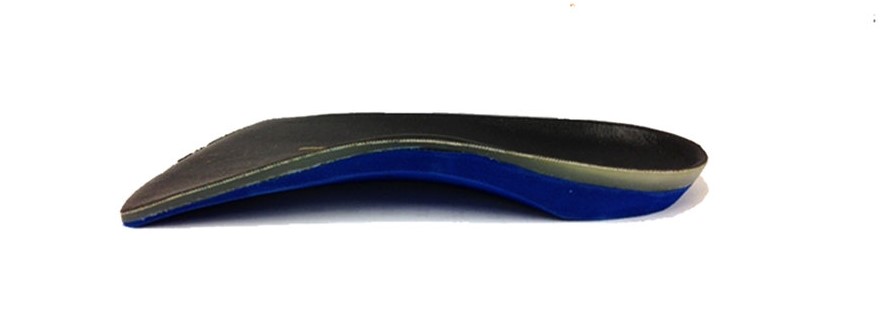
Orthotic that was used
The researchers made two types of custom orthotics. One completely blocked the arch from collapsing while the other allowed the arch to compress (or collapse) halfway. Only runners who did not use orthotics were recruited for their study. The runners ran on a force plate treadmill. The shoes had sensors inside which measured energy expenditure.

In order to have a baseline measurement, the runners ran in just the shoes (that were similar for all runners, pictured below) first followed by the same shoes at the same speed while testing the home made orthotics.

Picture from Scientific Reports

The runners tested the orthotics while walking as well as running.While walking, there was virtually no difference in energy expenditure. However, while running significant energy loss occurred.

In the orthotics that blocked all compression, researchers measured an energy cost of six percent (or less efficient by six percent) while the orthotics that allowed for 50 percent compression lost four percent.

Before you throw away your orthotics (if you're wearing them) the authors suggested don't throw them out yet as many runners get custom made insoles to prevent injury. They felt this is more important than saving energy without the orthotics. In fact the authors were very diplomatic and said that "We don't want to say orthotics are good or bad."

Likewise, if you are considering wearing orthotics (but may not need them), then maybe you shouldn't especially if you wanna run faster.

Reference

Stearne SM, McDonald KA et al (2016). The Foot's Arch And The Energetics Of Human Locomotion. Scientic Reports 6, Article number: 19403. DOI: 10.1038/srep1940.

Thursday, October 13, 2016

2 Pairs Of Under Armour Running Shoes

UA Charged Bandit 2 (L) and UA Speedform Slingshot (R)
My patient Marie came to our clinic last week to see me on how she was going with her training for the New York City marathon she was going to participate.

She had also brought along a few pairs of her running shoes to show me and we talked about running shoes for her race. The pair she'd chosen seemed rather heavy and clunky so I suggested the pair she was wearing then looked more suitable. She said that the UA Speedform Slingot she was wearing was more suitable for 5 km and below runs. She seemed a little hesitant about wearing them for the marathon as she thought she'll require more cushioning for the race.

She took them off and showed me and I actually tried them on and said that these are the kind of shoes I'd run with usually. I explained  why and then suggested she try them for a longer run. She then said she would try and get me a pair as she was sponsored by Under Armour.

So today Marie and Wilfred Mong, Brand Communications Manager from Under Armour came to our clinic and passed me 2 pairs of Under Armour shoes to try. The same pair Marie is now going to use for her New York City marathon the Speedform Slingshot and the Charged Bandit 2.

A big thank you to Marie and Wilfred.

Here's a closer look

Sunday, October 9, 2016

Can Exercise Be Good For Your Back Pain?


I never really had low back pain before, not before my accident anyway. It's a different story after my accident, although thankfully it's more of an ache occasionally than back pain now actually.

I seem to get back ache when I see too many patients in a row now. I used to be able to go through an entire day without needing a break. Now on a long day I often give myself two half hour breaks. In fact when I was started working again after my accident, my wife would schedule a 30 min break for me after I see four patients and made sure I rested. I started working two hours a day, three, then four and and so on. Now I usually won't see patients for longer than seven hours at a time.

I see patients 2 times a week at Physio Solutions now and often go without a break. I always take a bus there and run home when I'm done. Every single time my back is sore/ achy I still run because my back always feels better during and after the run.

You must be thinking, how can this be? Can exercise alleviate back pain?

Here's the strange thing, I was worried too when I first had back ache after seeing patients at Physio Solutions and was wondering if I should still run home. I ran anyway and within the first three minutes, my back started feeling better. Each time I had back ache and ran I had same result, my back always felt much better.

But I can't just tell my patients with low back ache/ pain to just go running, I have to be able to justify and explain why running (or other exercise) helps.

So I was rather pleased when I came across the following article (Belavy et al, 2016).

The authors wanted to understand what kinds if sports and exercise could be beneficial for the intervertebral disc (IVD) and they did a review on IVD adaptation with loading and exercise. They also examined the impact of specific sports on IVD degeneration in humans and acute exercise on disc size.

2 levels of the vertebrae and disc
Here's a summary of what the authors found.

Our human spine likes dynamic, axial loading at slow to moderate speeds. This means that loading forces that are performed regularly for longer time periods that are dynamic (not static) but not rapid and of a magnitude up to approximately those seen in jogging/ running are likely to result in positive adaptations to the IVDs.

High impact loads, explosive movements, extreme ranges of movement as well as sedentary behaviour, disuse and immobilisation are likely detrimental to the IVD.

Static or very rapid loads, magnitudes that are too low (e.g. lying) or too high (lifting in flexion) are not beneficial to your IVDs. Yes sitting is bad for you as I've written before and also too much bed rest.

The authors also mentioned that running and upright endurance sports are either beneficial or at least not detrimental to the IVD. However, sports like elite swimming, baseball, weightlifting, rowing and equestrian riding are more likely to lead to IVD degeneration.

I was very surprised to see elite swimming on the not beneficial list. During the tumble turns, loading direction and speed of loading will be in torsion and/ or extremes of range. Amateur swimming is more likely to be at the very least less detrimental to the IVDs, but it is unclear whether it will be beneficial for the IVDs.

Come talk to me if you need to find out more. I have a compression fracture in my L1 and a fractured skull after my bike accident.

Reference

Belavy D, Albracht K et al (2016). Can Exercise Positively Influence The Intervertebral Disc? Sports Med. 46:473-485. DOI:  10.1007/s40279-015-0444-2.


*Many thanks to Elizabeth Boey who got me the article. Email me if you want a copy of the article.