Showing posts with label Overpronation. Show all posts

Sunday, April 26, 2026

Flat Feet And Overpronation

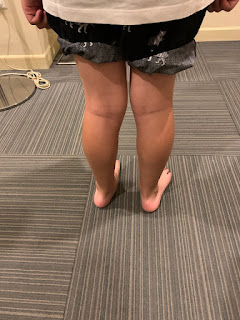
On Friday night, a patient sent me a message with pictures (above) regarding her daughter's flat feet. She was worried that it was affecting her knee, hip and lower back. Subsequently, she brought her daughter into the clinic to see me yesterday. 

Her daughter has increased her running and training more recently for her National School Games bowling competition in the first week of May. She just started having mild pain in her left foot on Friday. Because of the pain, my patient was worried about her daughter's "over" pronation. 

The readers following this blog will recall that I have written before that children from 11 months to 19 years old with flat feet are perfectly fine and do not need orthotics. You can view the Cochrane review here

"Over" pronation is a word that is often used by many healthcare professionals to tell their patients that it is a cause of their foot pain. However EVERYONE has to pronate when they walk or run. When you take a step forward while walking, you often land on your heels. After heel strike, the whole foot lands on the ground and this is when your foot pronates. Now imagine having insoles or orthotics to block that movement. That is what happens when you try to limit pronation.

This mechanism is very necessary otherwise no load will be distributed up the leg. In fact, it often does not cause issues in runners. And yet, patients are somehow steered and asked to avoid, limit or alter pronation at all cost.

Of course there may be occasions when you have pain in your foot or arch, and healthcare professionals may have to take the load off the area temporarily to alleviate the structures that have been irritated.

The following study by Nielsen et al (2013) published in the British Journal of Sports Medicine investigated whether newbie runners with different foot positions had more or less injuries by wearing a neutral shoe regardless of their foot type or mechanics.

The 927 newbie runners with different pronation types were followed for a period of 12 months. All the runners received the same pair of neutral running shoes regardless of whether they had neutral foot pronation or not.  

The runners accumulated a total of 163, 401 km that year. 252 runners suffered a running injury in that period. In addition, the number of injuries per 1,000 km of running was significantly lower among runners who under or over pronate than among those with neutral foot pronation.

The authors found "no risk that overpronation or underpronation can lead to running injuries through using neutral shoes for this special group of healthy beginners." The authors "compared runners with neutral foot pronation with the runners who pronate to varying degrees, and our findings suggest that overpronating runners do not have a higher risk of injury than anyone else."

The authors thought their findings were 'controversial', since it has been assumed for many years that one would risk injuries to run in shoes without the necessary support if you under or over pronate.

The study also found that the risk of injury was the same for all their runners after the first 250 km, irrespective of their pronation type. 

Note that the study did not look at what can happen if runners run in a pair of non neutral shoes nor did they investigate what runners should consider with respect to pronation and choice of shoe if they are already injured.

So as I explained to my patient and her daughter whose foot pain has gone away, that pronation or more accurately, overpronation is not to be feared.

References

Nielsen RO, Buist I, Parner T et al (2013). Foot Pronation Is Not Associated With Increased Injury Risk In Novice Runners Wearing A Neutral Shoe: A 1-Year Prospective Cohort Study. BJSM. DOI: 1136/bjsports-2013-092202.

Sunday, August 27, 2023

What Causes Running Injuries?

Navicular drop from Physiopedia
Recently we have seen more runners coming to see us in our clinics. A few are preparing for the Berlin marathon next month while others are preparing for ultras and the local Stan Chart marathon later in the year. What was common is their lack of gluteus medius strength, sudden increase in training loadchange in running shoes amd not enough recovery.

How did my observation compare to a published research on factors associated with running related injuries? This group of researchers aimed to identify factors associated with running related injuries and also to evaluate their potential in injury screening.

274 recreational runners were recruited for their study. At baseline, running technique, clinical measures (strength, range of motion (ROM), foot position), impact loading, injury and training history were collected. These runners were followed up fortnightly for 1 year.

49 runners dropped out leaving 225 (84 females, 141 males) for the final analysis. 52 percent experienced a running related injury. Calf strain (15 percent), Achilles tendon injury (11 percent) and plantar fasciitis (9 percent) made up the largest proportion of injuries.

After adjusting for age, weekly mileage and sex, the following factors were statistically significant and associated with increased likelihood of injury. Previous injuries in the past year, less navicular drop, weaker hamstrings and measures of running technique (knee, hip and pelvis kinematics) were associated with increased likelihood of injury.

There were significant associations between running injuries and hip and knee kinematics like contralateral (opposite side) pelvic drop and increased knee inward rotation. All of which I have written about before in a previous post.

I was surprised that the calf constituted the highest proportion of injuries. I (falsely) assumed the knee would be the most common site of injury. Perhaps popularity in adopting forefoot and midfoot running styles (which takes load away from the knees but transfer them to the calf, ankle and Achilles) compared to heel striking which loads the knee more. 

Another study found shin splints and stress fractures followed by Achilles tendon injuries to be the most common diagnosis in recreational runners (Mulvad et al 2018).

Only the navicular drop test (not strength, ROM, foot positioning among the clinical measurements) was associated with injury. The navicular drop is a measurement of how much the navicular bone moves from a neutral sitting position to standing. The larger the movement, the larger the collapse of the arch of the foot. 

The researches found that the less navicular drop, the higher the chances of injury, a navicular drop <10mm increased injury odds by 2 times. Values of the navicular drop test in this study would place the uninjured runners in the "pronated" foot category and the injured runners in the "neutral" foot category.  

The researchers explained that uninjured runners may have a more flexible foot with increased capacity to absorb loads. This supports emerging evidence that flat feet may be protective in nature as compared to previous views that flat feet needs 'support'. 

One of my often copied Shoe Lists update

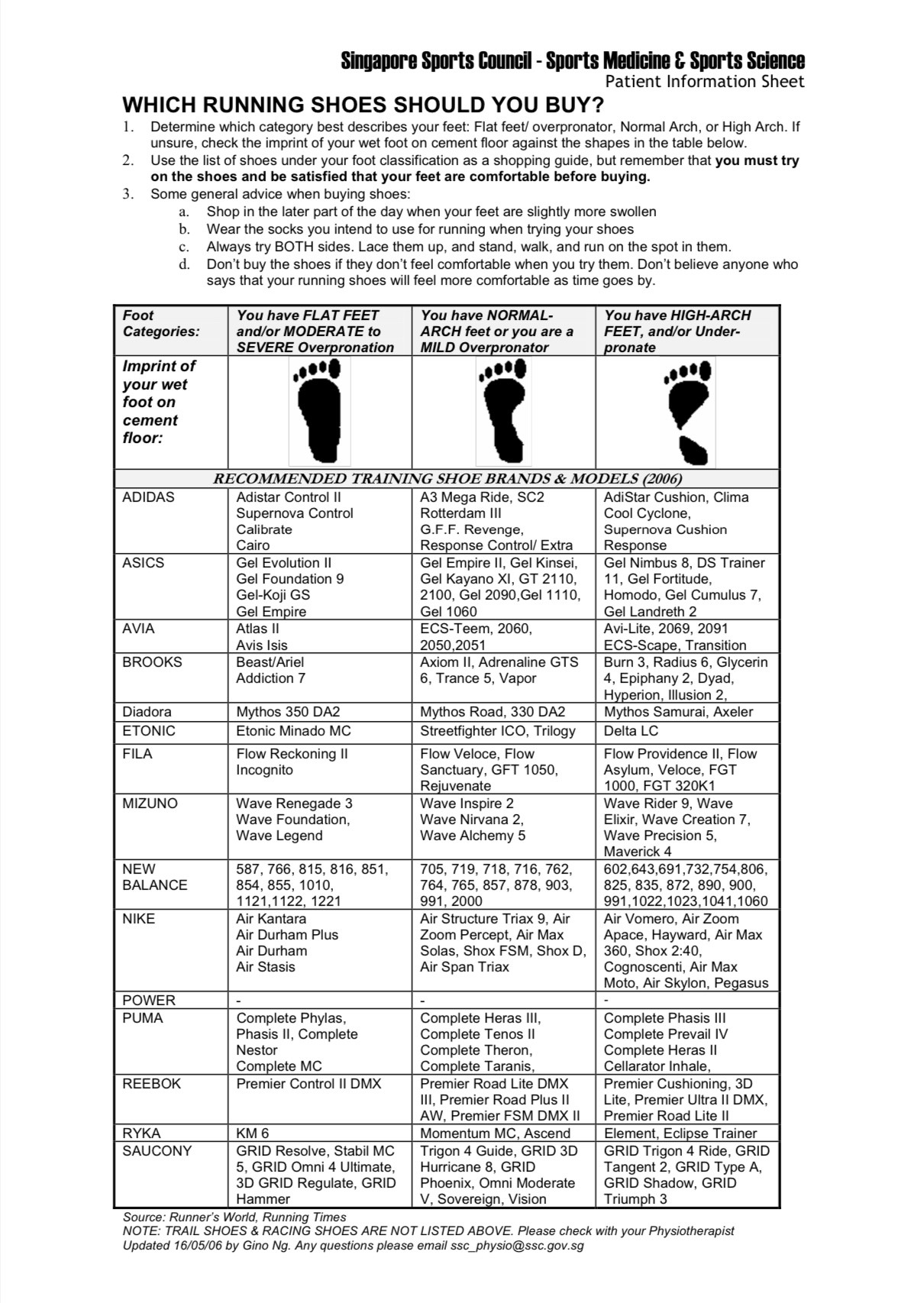
For years, podiatrists, coaches and shoe salesmen have looked at your foot type (to see if you have normal, low or high arches) (pictured above), then recommended that you have stability, motion control and cushioned shoes respectively. The rationale being that if you had high arches, you did not pronate enough and needed softer, well cushioned shoes while if you had low arches, you tend to overpronate and needed sturdy motion control shoes to control that overpronation. Runners with normal arches needed neutral shoes and were prescribed stability shoes. This method was deeply rooted in athletic circles and widely accepted. Time to bin that permanently.

 Also relate this to wearing orthotics. Patients are to told that orthotics help prevent the arch from "collapsing". This study shows that if the arch does not collapse (or drop) more than 10 mm,  you are twice as likely to get a running injury. Something to mull over for runners who have been told to wear orthotics. We (sports doctors, physiotherapists, podiatrists etc) MUST definitely reconsider running injury prevention and treatment techniques aimed at correcting 'overpronation' since there is no association between foot eversion (pronation) and running injuries in this study.

Previous injuries less than a year ago was a strong predictor of getting injured again. This may indicate that some runners have not regained original tissue strength or they have alterations in technique that increase their vulnerability to injury. 

References

Dillon S, Burke A, Whyte EF et al (2023). Running Towards Injury? A Prospective Investigation Of Factors Associated With Running Injuries. PLoS One. 18(8): e0288814. DOI: 10.1371/journal.pone.0288814

Mulvad B, Nielsen R, Ling M et al (2018). Diagnoses And Time To Recovery Among Recreational Runners In The RUN CLEVER Trial. PLoS One. 13(10). pmd:30312310. DOI: 10.1371/journal.pone.0204742

Sunday, January 23, 2022

No Need To Treat Your Child's Flat Feet

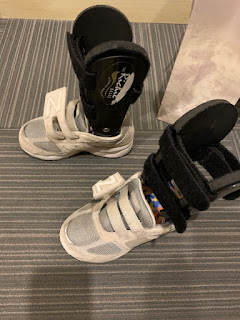
My young patient (only 6 years young then) was told he had flat feet, pronated 'too much' and needed orthotics. He was prescribed the pair of ankle foot orthoses pictured below. His parents ended up a few thousand dollars poorer and they were told to bring him back for more appointments. 

I could not begin to imagine the trauma this child had to go through mentally and physically, having had to wear those orthotics (picture below) whenever he went out. In my opinion, these 'orthotics' look like they will do a better job limiting ankle movement with the stiff upright medial (inner) and lateral (outer) sections.

Parents with children who have flat feet please take note. This latest Cochrane Review (just published on 14/1/22) states that "in the absence of pain, the use of high cost customised foot orthoses (CFO) for healthy children (from 11 months to 19 years old) with flexible flat feet has NO supporting evidence, and draws very limited conclusions about foot orthoses for treating paediatric flat feet". 

Review articles from the Cochrane Database of Systematic Reviews are highly respected and trusted. Google it if you like.

Not just costly CFO's, less expensive prefabricated (off the shelf) foot orthoses are not needed as well.

This Cochrane review also suggests that there is no further need to research asymptomatic flat feet in healthy children. It is better to focus on other paediatric conditions instead. 

Parents, now you know, do not waste your time and hard earned money on orthotics for your children. Don't worry too much about their shoes too. Email me if you want a copy of the article.


Reference

Evans AM, Rome K, Carroll M et al (2022). Foot Orthoses For Treating Paediatric Flat Feet. Cochrane Database of Systematic Reviews. Issue 1. Art No: CD006311. DOI: 10.1002/14651858.CD006311.pub3. Accessed 18 January 2022.

Sunday, March 21, 2021

Reliable Predictors Of Running Injuries

You need a new pair of running shoes so you decide to go to a specialist running store to choose a pair that's suitable for you. The store manager at the specialist running store tells you to hop onto their in store treadmill and 'analyzes' your running gait.

He then proceeds to critique your running gait and its biomechanical implications. And suggests the most expensive running shoe (in the store) for you so you do not get injured. Is that a common scenario that happens?

Contrary to several long held beliefs, most biomechanical and structural factors are not reliable factors at predicting running injuries

Researchers studied 300 runners who have been injury-free for the past six months and found several more reliable factors (rather than biomechanical and structural factors) in predicting who would be more likely to get injured.

The runners' demographics, physiology, biomechanics, psychosocial issues and training were documented. Their hamstrings, quadriceps muscle strength, knee, ankle flexibility, arch height of their feet were tested. 

A gait analysis studied how their feet, knees and hips distribute forces while running

Any runner who reported an injury were followed up at six and twelve months later. After the first year, the researchers emailed the injured runners a biweekly questionnaire asking them what injuries they sustained in the past two weeks.

Those that were injured went to a doctor and physiotherapist who were part of the study for treatment.

Results of their study after the two year follow up indicate that female runners sustain injuries at a higher rate than male runners. Stiffness in the knee joint, which were more common in runners weighing more than 80 kg significantly increases the chances of an overuse running injury. 

The runners who were injured also reported significantly worse mental health related to their quality of life and more negative emotions compared to the non injured runners.


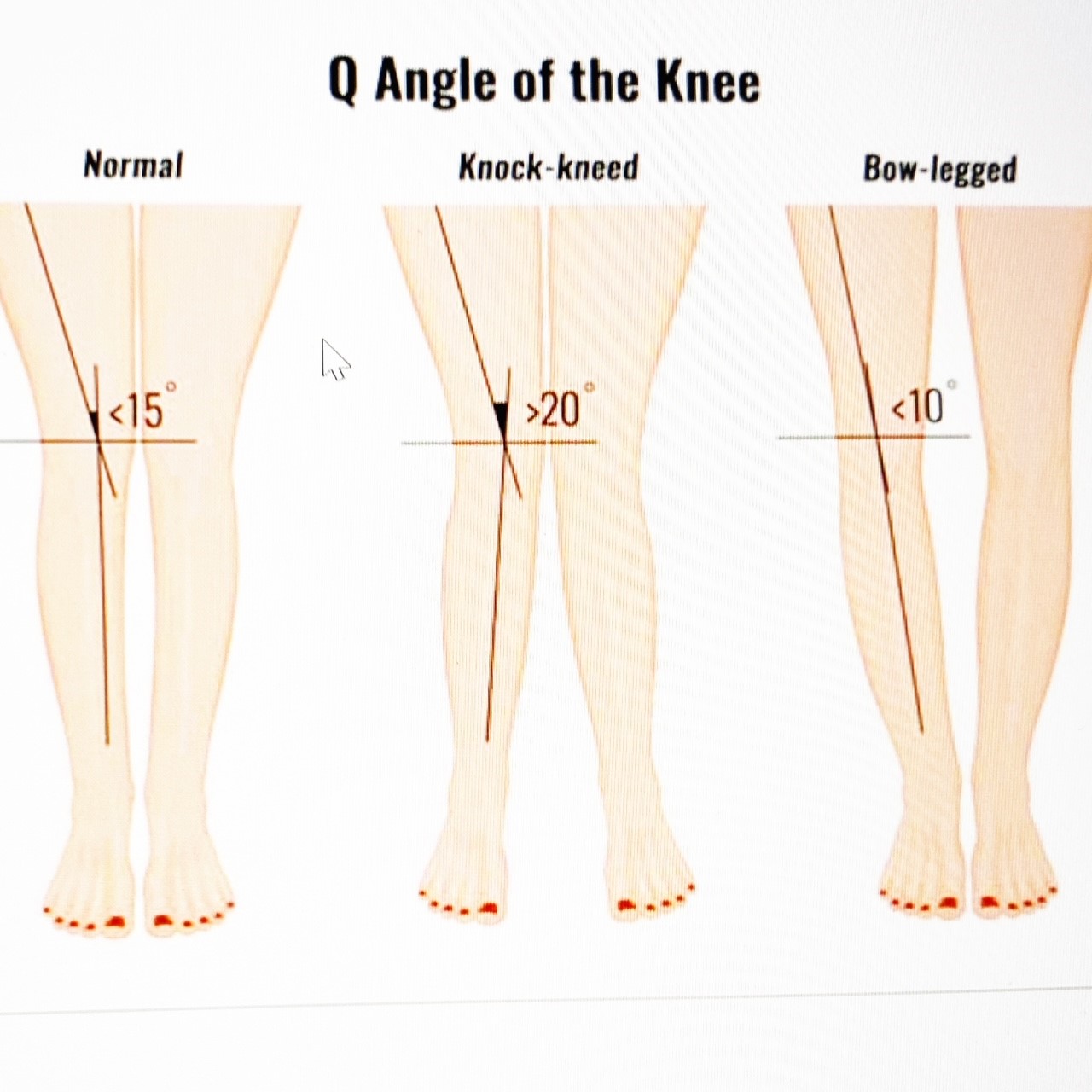
Most biomechanical, structural factors like arch height, overpronation, flexibility, Q-angle  (see picture above), lower limb strength, weekly mileage, footwear and previous injury are not reliable factors for overuse running injuries.

The researchers recommended that caution should be used when trying to alter what were commonly thought risk factors such as excessive pronation, poor flexibility, weekly mileage etc unless a runner has extreme values.

It appears from this study that the importance of biomechanics and anatomical structures assumed by doctors, physiotherapists, personal trainers and other clinicians are not as high risk as assumed. 

I feel that this does not mean they are not important. It is still important to consider the individual patient/ runner when assessing their condition. 

We still need to be aware of each patient's individual structural and biomechanical anomalies, but not to the point where we nitpick every discrepancy in strength, joint angle, foot position and range of motion.      

Reference

Messier SP, Martin DF, Shannon L et al (2018). A 2-Year Prospective Cohort Study Of Overuse Running Injuries: The Runners Injury Longitudinal Study (TRAILS). AJSM. 46(9): 2211-2221. DOI: 10.1177/0363546518773755

Monday, October 15, 2012

A Podiatrist's View on Overpronation

Podiatrist Ian Griffiths feels the word "overpronation" should be banished. In fact, he feels the term "overpronation" should be erased from current day usage in both the medical and lay communities. Surprised that this is coming from a podiatrist? Please read on.

Overpronation has often been blamed for causing injuries.  In fact, there is little evidence that excessive pronation causes injury for that matter. Griffiths' view (and yours truly as well) is that pronation is only one of many factors to consider when assessing an injured patient.


In truth, pronation is completely normal. Majority of data collected suggests that the average normal foot position is actually mildly to moderately pronated and not "neutral". In fact, some studies even suggest that a pronated foot type can be protective against injury.

This does not mean that you will not suffer from pain or injury associated with your foot movement or pronation patterns. This means that the relationship between pronation and injury is not consistent or predictable and poorly understood at best.


Most of my patients who wear motion control shoes have always been told by their Physiotherapist/ Podiatrist/ Sports Doctor/ running shoe shop assistant that they go to telling them they have flat/ low arches and that they need to control their "overpronation".  Well, now you know that there is actually very poor evidence that these motion control shoes achieve this. Based on what you now know, if the shoe store you go to (or physiotherapist/ podiatrist etc) tell you to choose shoes based solely on how flat your arch looks or how much you pronate then you'd better leave.... pronto.

*Here's the Ian Griffith's article.


Have a look here to read Griffith's view on running shoe selection.

I've also written about running shoes here and here.

Tuesday, August 3, 2010

Do Your Running Shoes Prevent Injuries?


How do you choose your running shoes? I've been asked that question many times over. I've even compiled a shoe list regularly over the years since the 90's and yes many other physios, health professionals etc have conveniently/ blantantly taken out my name and passed the list off as their own (picture below).


One of my often copied shoe lis
For years, podiatrists, coaches and shoe salesmen etc have looked at your foot type (to see if you have a normal, low or high arches) and then recommended that you have stability, motion control and cushioned shoes respectively. The rationale being that if you had high arches, you did not pronate enough and needed softer, well cushioned shoes while if you had low arches, you tend to overpronate and needed sturdy motion control shoes to control that overpronation. Runners with normal arches needed neutral shoes and were prescribed stability shoes. This method was deeply rooted in athletic circles and widely accepted.

The above mentioned method was exactly what the US military did in terms in handing out shoes to their recruits as injuries were rampant during basic military training. Military authorities hoped that injury rates will drop by ensuring their recruits were fitted with the correct shoes according to their foot type.In order to determine whether fitting correct shoes help in lowering injury rates, military researchers found no scientific literature in support of what they were doing and decided to do their own research.

And you know what, they found almost no correlation at all between wearing proper running shoes and avoiding injuries (this is published in the American Journal of Sports Medicine recently). Injury rates were actually highest amongst soldiers who had received shoes fitted according to their foot types. Wearing the so called "correct" shoes for their type of feet had actually increased the recruits' chances of getting injured.

If you have been following our blog, you would have read that Sports Solutions first wrote about this last year when researchers in another published article in the British Journal of Sports Medicine concluded that sports medicine specialists should stop recommending running shoes based on a person's foot type as there was no evidence supporting it. Please have a look at one of our our more popular post last year

And just in case you decided that published studies on military recruits were of a lower quality, another study done on experienced runners was published more recently in support of the military subjects paper. In this study, 81 runners were classified according to their foot postures (a more detailed measure of foot type than just arch shape). Runners in each category were then randomly assigned one of 3 footwear conditions, neutral (Nike Pegasus), stability (Nike Structure Triax) and motion control (Nike Nucleus).

All the women embarked on a 13 week half marathon training program. How did they fare? Nearly a third of the women had to miss some training days because of pain, with a majority of the injured runners wearing (yes you guessed correctly) shoes specifically designed for their foot postures. What's more, also of note was that motion control shoes were the shoes across the board that "caused" the most injuries.

Now in theory, overpronators should benefit from motion control shoes to limit their overpronation. However, these runners who overpronated actually complained of pain and missed training after wearing them as did a number of runners with normal feet and every single underpronating (or high arched) runner randomly assigned to a pair of motion control shoes.

This is despite that fact that motion control shoes do limit over pronation as numerous biomechanical studies of runners running on treadmills have repeatedly proved that runners who wear motion control shoes have significantly reduced pronation.

There you go, not quite what you may expect I imagine. Please email this to your friends who are planning to invest in new running shoes.

I have all 3 articles, email me if you want a copy.

References

Knapik JJ, Trone DW, Swedler DI et al (2010). Injury Reduction Effectiveness Of Assigning Running Shoes Based On Plantar Shape In Marine Corps Basic Training. AJSM published online before print June 24, 2010.

Richards CE, Magnin, PJ and Callister R (2009). Is Your Prescription Of Distance Running Shoes Evidenced Based. BJSM. 43(3) : 159-162.

Ryan MB, Valiant GA, McDonald K et al (2011). The Effect Of Footwear Stability Levels On Pain Outcomes In Women Runners: A Randomised Control Trial. BJSM. 45:715-721. DOI:10.1136/bjsm.2009.069849.

Tuesday, March 17, 2009

Pain Free Running


Do you want to run pain free? please read on if you do.

As you have read from the previous post, the thick heels from your high tech running shoes will encourage you to land with a heavier heel strike. Landing on your heels causes you to pronate (or roll your foot inwards) which then puts stress on your shins (leading to shin splints), knees, hips and your back. This "unnatural" heel strike is partly to blame for causing all sorts of running injuries. The evidence is now considerable and definitely stacking up in the article from the previous post.

Is landing our our heels unnatural you will definitely ask. Well, I'm going to say yes. Next time you happen to be in the company of little children look at how they walk or better still, see how they run. Parents who have kids and are reading this will tell you their little ones are always "falling forwards" as if they are tipping over slightly whether walking or running. And believe me they have a nice smooth style and they are fast. They also have no foot pain (or knee, hip and back pain for that matter) even though they love running around barefooted. Somehow as we grow older, we all stand up taller and walk with our stride out longer and landing on our heels.

We've had patients who have been told never to run again but are able to run pain free and even take part in races after seeing us at Physio and Sports Solutions. How do we do it? We do it by teaching you how to run with good technique so you can run pain free. Similar to how little kids run. Come and join us at our running club (please see the Physio Solutions or the Sports Solutions site for details) or come see us in the clinic.