Showing posts with label Levofloxacin. Show all posts

Sunday, March 13, 2022

Train Your Tendons

If you are a runner and have had pain in your Achilles tendon, you know it takes a long time for it to get better. Compared to muscles, our tendons and ligaments have much poorer blood supply so they take a longer time to heal. Currently, most healthcare professionals recommend the Alfredson protocol (up to 180 eccentric heel drops a day) to get your Achilles tendon better.

Trained runners have been found to have a thicker Achilles tendon, stiffer and better structure compared to novice runners. A longer, stiffer tendon stores more energy and releases that energy when you push off with each step. It has also been speculated that the dominance of international running races by Kenyan runners are due to their long and springy Achilles tendon (Tawa and Louw, 2018).

Can you then train your tendons? Consider the following study. 40 pairs of identical twins were asked about their physical activity and sports habits to determine how active they were. Researchers then measured the stiffness of their Achilles tendons.

Results show that when one twin is active and the other inactive, the active twins have tendons 28 percent stiffer. Since identical twins start with identical genes, this shows that long term training can change the structure of the Achilles. It also fits in with previous studies that trained runners have thicker and stiffer tendons. These runners were not elite runners so you don't need excessive training levels to change your tendons. But these runners have been running for an average of 15 years, so there's plenty of time for change to occur.

Another point to note from the study. Those who did activities that involve an aerial phase with both feet off the ground (running, basketball or tennis etc) had a stiffer TA compared to those with no aerial phase (cycling, walking and swimming). This suggests that jumping and landing may hold clues to getting your Achilles tendon stiffer and stronger.

Tendons may be slow to heal and adapt to load, but for those of you who run, surely this is an incentive to keep on running. Those who play football, basketball or tennis, please carry on too.

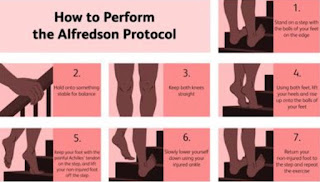
Currently, when you visit your current healthcare provider for treatment, most will just recommend the Alfredson protocol (up to 180 eccentric heel drops a day) to get your Achilles tendon better. That you can do yourself (picture below).
In our clinics, after we assess you thoroughly, we mostly use our hands to treat what we find, no ultrasound, no orthotics, no shockwave (ESWT), no electrotherapy. And we get very good results. We DO NOT get you to do exercises DURING the time you have with us. We do treatment that you cannot do yourself.

Previously, I've written that there is some evidence that gelatin (or jell-o) can help tendons heal. Perhaps that is an area you may also want to explore? And do take note that some antibiotic medications can damage your tendons.


References

Sichting F, Kram NC and Legerlotz K (2022). An Identical Twin Study On Human Achilles Tendon Adaptation: Egular Recreatinal Exercise At Comparatively Low Intensities Can Increase Tendon Stiffness. Front. Physiol. DOI: 10.3389/fphys.2021.777403

Tawa N and Louw Q (2018). Biomechanical Factors Associated With Running Economy And The Performance Of Elite Kentyan Distance Runners: A Systematic Review. J Body Mvt Ther. DOI: 10.1106/j.bmt.2017.11.004
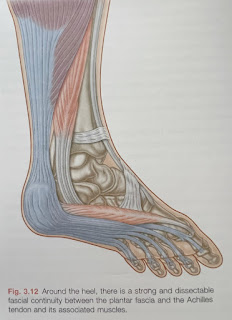

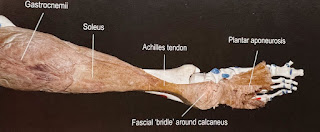
See how closely the Achilles and plantar fascia are related. In order to get the Achilles tendon better, you need to treat the plantar fascia as well.

Sunday, May 22, 2016

Tendon Damage Linked To Antibiotics

Picture by Oliver.Dodd from Flickr
I thought my patient was kidding when he mentioned that his ruptured Achilles was due to his antibiotic medication. He had to have surgery repair his ruptured Achilles tendon and came to our clinic for treatment and rehabilitation.

I did a quick search and found that the US Food and Drug Administration (FDA) has (since 2008) made it compulsory for drug companies to put a warning label on the side effects of ingesting fluoroquinolone (FQ).

Now if you have taken antibiotics (especially fluoroquinolone), regardless of whether you're active or not, you might want to read on.

FQ are a popular class of broad spectrum antibiotics. They are able to kill a wide range of harmful bacteria and will often work against infections that are resistant to other drugs.They are commonly prescribed for sinus, chest, stomach, kidney and urinary tract infections.

Levaquin (levofloxacin) and Cipro (ciprofloxaxin) are the more commonly prescribed medications. Basically, beware of any antibiotic medications that end with floxacin.

FQ's are also ideal for joint and bone infections and Achilles tendinopathy (or wear and tear in the tendon) or rupture is among the most serious side effects associated with FQ use.

The average person taking FQ has a 70 percent greater risk of tendinopathy and a 30 percent greater risk for a full blown rupture compared to another person taking a different antibiotic. As the Achilles tendon has very little blood supply, it is more prone to injury. It is also the tendon most affected by FQ. The risk of Achilles tendon rupture is quadrupled with FQ. Other serious side effects include nerve damage, confusion and hallucinations.

I found enough data to suggest that FQ's should be used cautiously in a selected group of patients. Older male runners (> 60 years), people with kidney disease, those taking corticosteroid medications (commonly used to treat asthma) are the most vulnerable.

The higher your dosage and the longer you take the medication the greater the danger. The risk does not go away when you stop taking the medication. Tendon problems linked to FQ can appear weeks, months or even years later.

My take is if you're active and if you have sinusitis, bronchitis or a urinary infection, try and ask your doctor if you can take another class of antibiotics instead. This is another good reason to find a doctor/ physiotherapist who understands athletes and knows about your training. Personally I would avoid these medications if at all possible.

In instances where your infection does not respond to other medication and treatment you may still have to take FQ's. You may then have to adjust your training during and after the medication. You may have to cut back your mileage, hill running, intensity for up to nine months after taking FQ's.

Watch out for new pain in any of your lower limb tendons, especially your Achilles (although quadriceps, peroneal, hamstring and rotator cuff tendons have also been reported).

Remember to rest sufficiently after training to avoid picking up any colds that may lead to sinus and chest infections.


Reference

Kim GK (2010). The Risk Of Fluroquinolone-induced Tendinopathy And Tendon Rupture. What Does The Clinician Need To Know? J Clin Aesthet Dermatol. 3(4): 49-54. PMCID: PMC2921747.

Picture by Thirteen Of Cubs from Flickr