Showing posts with label eccentric exercises. Show all posts

Sunday, November 1, 2026

The Repeated-Bout Effect

Picture from Iwannaburnfat
Those of you who are preparing for races with long downhills (like Boston) or trail races may want to know this. Or even personal trainers and strength coaches getting their athletes to do eccentric exercises.

If the long descent (or an eccentric exercise) is unaccustomed, it can cause muscle damage, soreness and a loss of strength (or delayed onset of muscle soreness - DOMs). However, repeating the same activity causes far less damage the second time. This protection is known as the repeated-bout effect. It is not commonly known how long the protection lasts. Let's see what the latest research found.

48 young males were recruited for this study. They did 2 identical exercise sessions where 5 sets maximal knee extension (straightening) exercise was peformed. Each set consisted of 15 repetitions at 60°/ sec.

4 independent groups performed the second bout of exercise 3, 6, 9 and 12 weeks after the first bout of exercise. 

Range of motion, delayed onset of muscle soreness (DOMs), muscle thickness (swelling), isometric torque (strength), echo intensity (tissue quality/ fluid accumulation), creatine kinase and high sensitivity C-reactive protein (hs-CRP) were assessed before, 2 and 4 days after each exercise bout.

Since the participants started with different levels of strength, soreness and blood markers, the researchers measured the subjects at baseline and then adjusted future data points based on their starting numbers. This allows the resarchers to evaluate how much strength each participant lost or recovered, rather than their raw strength.

The repeated bout effect was still present after 3 and 6 weeks across most outcomes and certain markers were still detectable after 9 weeks. At 12 weeks, all the protective effects were gone.

Please note that this study was done on young men performing isolated knee extension on a machine so some differences in timeline can differ in downhill running, for women and older runners.

So those of you preparing for races with long descents should ideally run a downhill-specific session every 3-4 weeks so your repeated-bout effect protection is intact. After a 3 month break or more or after the off-season, the first downhill session should be treated like a new first session. 

Picture from Iwannaburnfat
For strength coaches or personal trainers planning eccentric strength training cycles (like Nordic curls) to build injury resilience, you need to repeat the exercises within 6 weeks to maintain the protective adaptations. 

Reference

Theodorou AA, Margaritelis NV, Karyofyllidou et al (2026). The Duration Of The Repeated-Bout Effect After Eccentric Exercise. Scan J of Med & Sci Sp. e70381. DOI: 10.1111/sms.70381

Sunday, July 6, 2025

3 Common Sites Of Musculotendinous Junction Injuries

I recently had a patient with a musculotendinous junction injury. Also known as the muscle-tendon junction (MTJ), it acts like a bridge to transfer forces from the muscle via the tendon to the connecting bone the muscle attaches to. This allows for movement to take place. 

It is a special area where the muscle's fascia connects and inersects with tendon tissue. Structurally, the MTJ is seamlessly integrated into the tendon, with finger-like folds increasing the surface area for a stronger connection and to distribute stress (pictured above).

It's a common site for injury as the MTJ undergoes some stress during daily activities and substanstial stress while playing sports. MTJ injury is often accompanied with both muscle and tendon injuries leading to restricted force trasmission.

Due to it's highly specialized structure, it does not often heal well after injury. Conservative treatment are mostly effective for minor MTJ sprains while partial tears and complete ruptures will require surgical intervention.

It can happen during a fall leading to trauma to the area. It often occurs due to repeated overload, usually from high intensity training in young athletes or overuse in middle age or older adults. My observations are MTJ injuries usually happen after a period of rest/ decreased muscle use followed by a period of intense muscle activity. 

An example who be my patient mentioned above. He went on holiday for 3 weeks with no exercise and resumed his weekly basketball game on returrn and promptly tore his hamstrings at the MTJ. These tears occur frequently during eccentric muscle loading. 

They are usually complete muscle tears. In hamstring injuries this account for 14.4% of all bicep femoris injuries. The supraspinatus muscle has the highest incidence of the tendon midsubstance injuries (11.4%). Complete tendon avulsions are more frequent in the triceps brachii and pectoralis major.

Conservative treatmant options like rest, ice and compression etc helps in the initial stages if the tear is small. Several studies have indicated that surgical treatment yields better results in terms of function, strength, patient ratings and recovery to pre-injury performance for the more serious tears.

Continous development of tissue engineering that focuses on regenerating new tissue from cells are now helpful to MTJ injuries by utilizing biological and synthetic scaffold-based tissue. This helps in the repair and healing of MTJ tears. However it is not easy to fully mimic the unique characteristics of our muscles, tendons and the MTJ itself.

Hopefully, newer polymers and scaffolds will help with healing of MTJ injuries in the future. For now, please be vigilant in your exercise after a period of rest. Avoid exercising at higher intensities initially while allowing for your muscles to adapt again. Note that the calf, pectoralis major (chest) and hamstrings are the most vulnearble areas.

Reference

Tong Sm Sun Y, Kuang B et al (2024). A Comprehensive Review Of Muscle-Tendon Junction: Structure, Function, Injury And Repair. Biomedicines 12, 243. DOI: 10.3390/biomedicines12020423

Sunday, March 23, 2025

Muscle Damage Affects Your Running Gait

Picture from Aspetar
I was away for my Kinesio Taping recertification for Instructors last week and had to exercise in a new environment. As the gym was much bigger and had equipment that I do not normally have access to, I chose to use mostly those. 

As a result I ended with muscle soreness almost all over. I went for a run a day after I came home and my running stride felt 'off.' Turns out I was not imagining it. That is how our bodies try to protect itself. So is that good or is that a problem?

Turns out it may be both (Markus et al, 2025). The muscle soreness indicate that adaptations are beginning. However, that soreness can also change our running form, increasing injury risk.

To assess how exercise induced muscle damage (EIMD in this study) or delayed onset of muscle soreness (DOMS) affects running biomechanics and recovery, researchers got their subjects to run downhill for 60 minutes. This was done on a treadmill at -10 percent gradient. The runners ran at 65 percent of their max heart rate.

The researchers tracked running gait changes, muscle soreness, blood markers for muscle damage and also did MRI scans of thigh muscles immediately post run, 24, and 48 hours after.

The runners took shorter steps 24 and up to 48 hours after that run, likely as a compensating mechanism since taking a smaller stride is the body's way of reducing impact when muscles are fatigued or damaged. Damaged muscles were verified (significantly elevated) using blood markers (creatine kinase and lactate dehydrogenase) and MRI scans showed thigh muscles damage. 

Take home message? If you just had a hard training session or especially a race, you have to expect some biomechanical changes for at least 48 hours after that if you still want to run. Since you have a reduced stride length, your pace will be slower and you will be running less eficiently. 

Anything else that will help? My personal experience suggests that performing reduced intensity and low volume exercise will increase blood flow to the affected muscles and often reduce pain. Pedaling at low resistance on a stationary bike is ideal as you don't have to worry about traffic (if you ride on the roads). An easy swim or just walking in waist or chest height water works well too.

 Wearing compression garments will help reduce it as well. These above mentioned strategies do have some support in the research.

Or better still, give yourself a few days of well earned rest (especially after a race) before going hard again. 

Reference

Markus I, Arutiunian A, Ohayon E et al (2025). Kinetics Of Recovery And Normalization Of Running Biomechanics Following Aerobic-Based Induced Muscle Damage In Recreational Male Runners. J Sci Med Sport. DOI: 10.1016/j.sams.2025.01.002

Sunday, March 13, 2022

Train Your Tendons

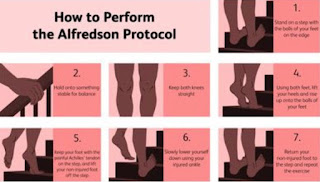
If you are a runner and have had pain in your Achilles tendon, you know it takes a long time for it to get better. Compared to muscles, our tendons and ligaments have much poorer blood supply so they take a longer time to heal. Currently, most healthcare professionals recommend the Alfredson protocol (up to 180 eccentric heel drops a day) to get your Achilles tendon better.

Trained runners have been found to have a thicker Achilles tendon, stiffer and better structure compared to novice runners. A longer, stiffer tendon stores more energy and releases that energy when you push off with each step. It has also been speculated that the dominance of international running races by Kenyan runners are due to their long and springy Achilles tendon (Tawa and Louw, 2018).

Can you then train your tendons? Consider the following study. 40 pairs of identical twins were asked about their physical activity and sports habits to determine how active they were. Researchers then measured the stiffness of their Achilles tendons.

Results show that when one twin is active and the other inactive, the active twins have tendons 28 percent stiffer. Since identical twins start with identical genes, this shows that long term training can change the structure of the Achilles. It also fits in with previous studies that trained runners have thicker and stiffer tendons. These runners were not elite runners so you don't need excessive training levels to change your tendons. But these runners have been running for an average of 15 years, so there's plenty of time for change to occur.

Another point to note from the study. Those who did activities that involve an aerial phase with both feet off the ground (running, basketball or tennis etc) had a stiffer TA compared to those with no aerial phase (cycling, walking and swimming). This suggests that jumping and landing may hold clues to getting your Achilles tendon stiffer and stronger.

Tendons may be slow to heal and adapt to load, but for those of you who run, surely this is an incentive to keep on running. Those who play football, basketball or tennis, please carry on too.

Currently, when you visit your current healthcare provider for treatment, most will just recommend the Alfredson protocol (up to 180 eccentric heel drops a day) to get your Achilles tendon better. That you can do yourself (picture below).

In our clinics, after we assess you thoroughly, we mostly use our hands to treat what we find, no ultrasound, no orthotics, no shockwave (ESWT), no electrotherapy. And we get very good results. We DO NOT get you to do exercises DURING the time you have with us. We do treatment that you cannot do yourself.

Previously, I've written that there is some evidence that gelatin (or jell-o) can help tendons heal. Perhaps that is an area you may also want to explore? And do take note that some antibiotic medications can damage your tendons.


References

Sichting F, Kram NC and Legerlotz K (2022). An Identical Twin Study On Human Achilles Tendon Adaptation: Egular Recreatinal Exercise At Comparatively Low Intensities Can Increase Tendon Stiffness. Front. Physiol. DOI: 10.3389/fphys.2021.777403

Tawa N and Louw Q (2018). Biomechanical Factors Associated With Running Economy And The Performance Of Elite Kentyan Distance Runners: A Systematic Review. J Body Mvt Ther. DOI: 10.1106/j.bmt.2017.11.004


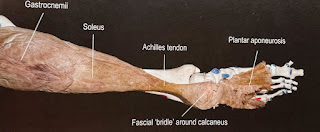
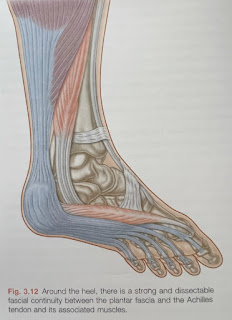
See how closely the Achilles and plantar fascia are related. In order to get the Achilles tendon better, you need to treat the plantar fascia as well.

Wednesday, October 25, 2017

Older Men And Calf/ Hamstring Injuries

Both the calf and hamstrings
After last week's post, I was just talking to my colleague and she noticed that (just like me), she has also seen a few cases of patients tearing the calf muscles too. All happened to be male patients on the older side of 40 years old.

I thought of my own patients with calf muscle strains/ tears and realized that they too tended to be the older male patients too.

I was pleasantly surprised that our observations was spot on. A recently published article in the British Journal of Sports Medicine investigated over a thousand articles on the risk factors of calf muscle strains. Ten articles satisfied their inclusion criteria of which more than 5000 athletes in football, rugby union, Australian rules football, basketball and triathlon were involved.

As you get older, your aging athletic body has a few things going against you. You have a higher incidence of disc degeneration and the potential of L5 nerve root compression as mentioned in last week's post.

Older athletes lose some muscle power output and rate of force production. (Trust me on this, I have definitely experienced this).

Moreover, as the athlete gets older, your testosterone levels and production start to decline and this may limit your muscles' rate of recovery, which can lead to accumulative fatigue.

The most predictive risk factors were down to age and previous injury of calf strain. Having previous hamstring or groin strain was also a contributing factor. A possible proposed mechanism for this is a change in the change in the muscle architecture following a muscle strain.

When your muscle heals after a previous injury, the damaged muscle is usually replaced by a fibrotic scar tissue. It is often common to get future damage in the areas adjacent to this scarring.

Another factor that may play a role is due to a change in the length and shape of your damaged calf muscle. Shorter muscle fascicle length has been noted as a risk factor for repeat hamstring strains too.

We can't help you when it comes to your age and previous injuries to the calf and/ or hamstrings. But what we can do along with treating you is to ensure you have a sound rehabilitation process with some definite focus on eccentric exercises.

Here's a tip for those who you who haven't seen us in our clinics. Do your eccentric training at the end of the day when you have no training scheduled or only light training the next day. This minimizes the risk of DOMs or delayed onset of muscle soreness.


Reference

Green B and Pizzari T (2017). Calf Muscle Strain Injuries In Sport: A Systematic Review Of Risk Factors For Injury. BJSM. 51: 1189-1194.

Saturday, May 6, 2017

Eccentric Exercises

I was talking with a patient of mine earlier who exercised by climbing up and going down the stairs at his 40 storey flat while carrying a 16 kg backpack. He knew about my past results climbing stairs and wanted to know why walking down a flight of stairs seems to be more effective at building his muscle strength than walking up the same flight of stairs.

Going down the stairs with his 16 kg backpack meant he had to really control his step and lower himself down slowly rather than just letting himself go. This meant that he was doing an eccentric exercise.

Say you want to train your biceps (arm muscles). When you bring the dumbbell up, the muscle is shortening, that is also known as a concentric muscle action. If you lower the dumbbell slowly (which is more difficult), the muscle is lengthening or an eccentric muscle action.

Eccentric exercises are more demanding on the muscles and fatigues then far more than concentrically. It also damages (or breaks down the muscle) to a greater extent, so there is greater stimulation and subsequent growth.

Try this if you want get better leg strength in a shorter time. Bend your legs more deeply when going down stairs of hills. Your legs will be sore from DOMs or delayed onset of muscle soreness. Once your muscles recover (after a few days), they'll be stronger and it will require much more eccentric exercises to get the same effect.

In fact, this was exactly what researchers found in a group of elderly men with chronic heart failure. Going down stairs appeared to be easier and more pleasant compared to the climbing stairs which the subjects found to be more demanding.

Changes in muscle strength were similar or even greater when going down stairs compared to going up stairs after six weeks of training.

To put this into practice, try bending your legs more deeply when going down stairs or slopes, lower your body more slowly doing push ups or pull ups. You'll be amazed at the results ..... after recovering from  the soreness.


Reference

Theodoru AA, Panayiotou G et al (2013). Stair Descending Exercise Increases Muscle Strength In Elderly Males With Chronic Heart Failure. BMC Res Notes. 6:87. DOI: 10.1186/1756-005-6-87.

Tuesday, July 14, 2009

Got DOMS?


This is what one of my patients who had DOMS did with his pain (cupping), hope you didn't do the same.

DOMS or delayed onset of muscle soreness is a condition where you have muscle pain, soreness or stiffness that is usually worse 2-3 days after exercise, hence the word delayed, and the pain usually subsides over the following few days.

Certain activities are more likely to cause DOMS. Those that require your muscles to forcefully contract while lengthening (eccentric contractions) seem to cause the most soreness. Ever took part in a race where there were lots of running downhill? Then you should know the feeling in your legs a couple of days later. Other examples of eccentric contractions are going down stairs or lowering your barbell slowly during weights. 

I've also seen patients/ athletes who had DOMS at the beginning of a new an exercise program (especially a new gym/ weight program), after a change in sports activities, or after prolonged or higher than usual intensity efforts.

DOMS is different from the muscle pain or fatigue you experience during exercise. The onset of pain from DOMS always occurs 2-3 days after the cessation of exercise. This helps differentiate it from more acute injuries such as a muscle rupture or sprain.

The soreness will go away on its own after a few days. There are a few things you can do to help. Icing or contrast baths (hot/cold) seems to help although no clear evidence proves they are effective. I had severe DOMS in my legs after my first half marathon race about 12 years ago and tried contrast baths and they didn't seem to help much. Gentle stretching of the affected muscles has also been recommended although there is again no real published evidence found.

There is some evidence that massage seems to help alleviate DOMS by about 30%, but it had no effects on muscle function.

Wanna know what seems to work? My personal experience suggest that performing reduced intensity and low volume exercise will increase blood flow to the affected muscles and often reduce pain. Pedaling at low resistance on a stationary bike is ideal as you don't have to worry about traffic (if you ride on the roads). An easy swim or just walking in waist or chest height water works well too. Wearing compression garments will help reduce it as well. These above mentioned strategies do have some support in the research.

Can you prevent it? Szymanski (2003) suggests the repeated-bout effect as a way of reducing DOMS. This is a progressive adaptation to eccentric exercise. If you perform repeated bouts of lower intensity eccentric exercise 1-6 weeks before your key event,it will help reduce DOMS and exercise induced muscle damage. Thus, a gradual introduction of eccentric exercise, over a period of weeks, is encouraged.

References

Herbert,RD and De Noronha, M. (2007). Stretching to prevent or reduce muscle soreness after exercise. Cochrane Database of Systematic Reviews. Issue 4. The Cochrane Collaboration.

Szymanski, D. (2003). Recommendations for the avoidance of delayed-onset muscle soreness. Strength and Conditioning Journal 23(4): 7–13.

Zainuddin, Z et al (2005).Effects of massage on delayed-onset muscle soreness, swelling and recovery of muscle function.Journal of Athletic Training.Jul-Sep;40(3):174-80.